
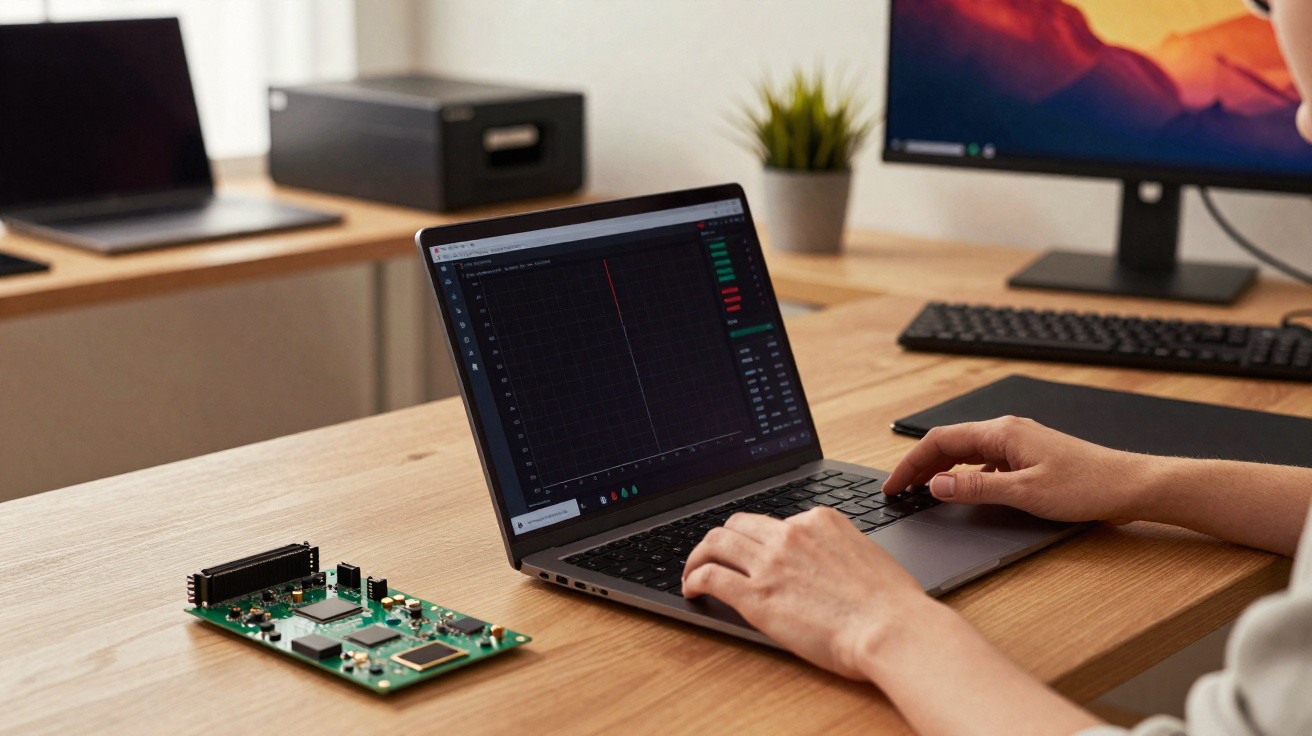
Nvidia may soon formally unveil its laptop chips, and several devices powered by them are reportedly already in development.
Thinking of replacing your PC? It may be worth holding off for a little longer: according to recent rumours, Windows machines could soon gain a new processor option.
Alongside conventional x86 PCs, such as systems fitted with Intel processors, an increasing number of Windows computers using Arm chips are now available. These Arm PCs include models powered by Qualcomm’s “Snapdragon X” chips, which offer Mac-like performance and power efficiency while being optimised for artificial intelligence.
Nvidia Arm chips could expand Windows PC choices
Consumers may, however, soon also be able to choose a PC running Nvidia chips based on Arm architectures. Rumours indicate that the first Windows PCs featuring an Nvidia chip could arrive in the near future, and they appear likely to be of particular interest to gamers. Before becoming a specialist in artificial-intelligence chips, Nvidia was best known for its graphics cards.
Nvidia could make an announcement in spring
As The Verge reports, Digitimes recently revealed that Nvidia could finally officially announce its N1 and N1X chips for laptops in spring. The company is also said to be planning a second generation, comprising the N2 and N2X chips, for release in 2027.
Lenovo and Dell models are reportedly planned
For the computers themselves, The Verge cites other sources suggesting that Lenovo already intends to market six models based on Nvidia’s N1 and N1X chips. Dell, meanwhile, could release an Alienware gaming PC and an XPS-branded model using Nvidia’s N1X chip.
These forthcoming Nvidia-chip PCs could also prove highly appealing in terms of graphics performance. Sources indicate that the N1X chip may feature as many CUDA cores as an RTX 5070 graphics card, while its CPU would have 20 cores, like the GB10 superchip’s CPU.
As usual, however, this information should be treated with caution, as it has not been officially confirmed.




Comments
No comments yet. Be the first to comment!
Leave a Comment