
How did Stockholm attempt to solve telephone chaos in the late 19th century?
During the 1880s, Stockholms Allmänna Telefonaktiebolag (SAT) pursued an ambitious aim: to provide every home in the Swedish capital with a telephone.
Expansion was so swift that, by 1887, Stockholm had around 5,500 subscribers, exceeding several major cities worldwide in its uptake of the technology.
What was the Malmskillnadsgatan telephone tower, and what did it do?
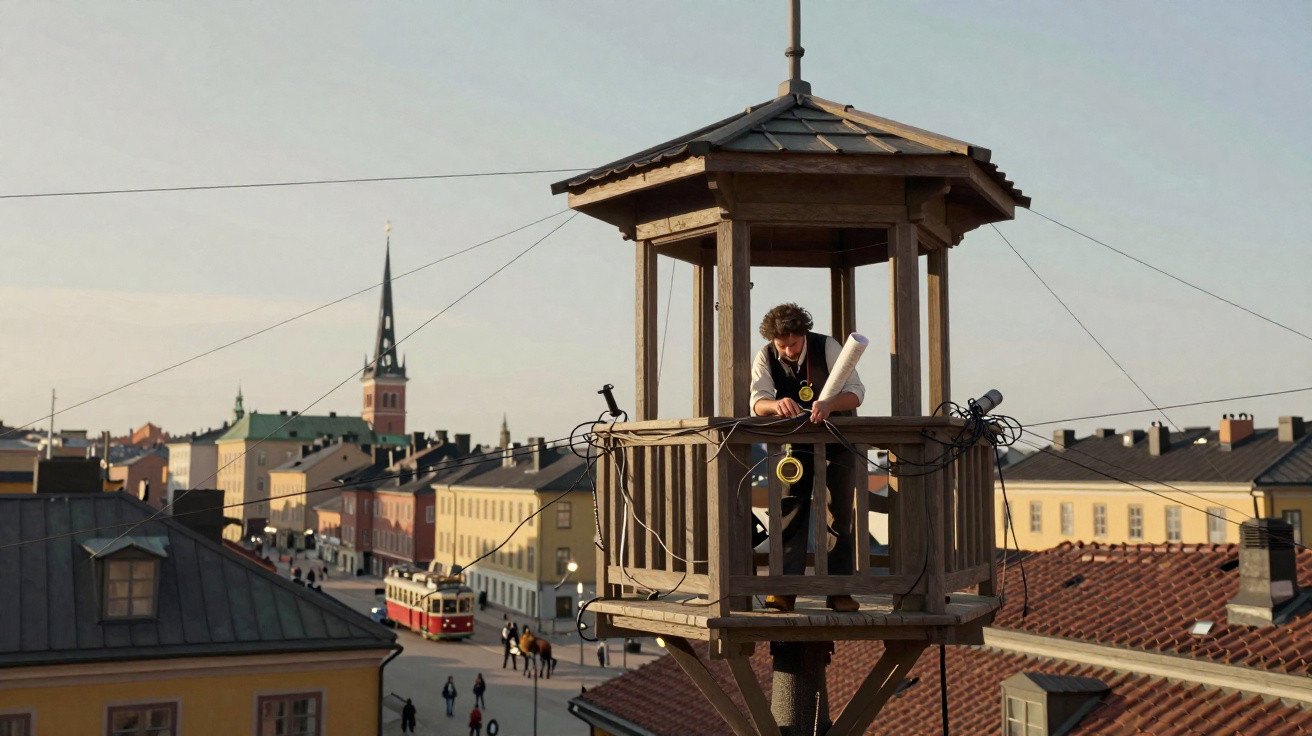
To manage the thousands of cables spread across rooftops, SAT erected a striking 45-metre steel tower on Malmskillnadsgatan.
The structure served as a vast central connection point, linking subscribers and substations within one organised network.
Why did Sweden become an early global leader in private telephony?
Telephone development in Sweden was driven by substantial private investment and the urban population's rapid acceptance of emerging communications technology.
As a result, Stockholm stood out internationally, recording a density of telephone users far above the period's average.
How did telephone wires become an urban problem in Stockholm?
The expanding network produced an unforeseen side effect: thousands of overhead cables began to build up above the city, creating a genuine urban web.
The principal problems caused by this tangle included:
- Visual pollution, as wires covered the city's rooftops
- Structural risk resulting from the cables' weight and overload
- Maintenance difficulties affecting telephone lines
- Urban disruption, drawing criticism from residents and authorities
Why did the telephone tower gradually lose its purpose?
As telecommunications progressed, engineers began replacing overhead cables with underground networks, which were safer and more efficient.
By 1913, the tower had already lost its main role and had become an outdated symbol of telephony's early phase.
How did Stockholm's telephone tower disappear from the urban landscape?
Once its technical purpose had ended, the structure was used to display advertising, taking on new temporary functions.
However, a severe fire resulted in its permanent demolition in 1953, bringing its history as an icon of Swedish engineering to an end.






Comments
No comments yet. Be the first to comment!
Leave a Comment