
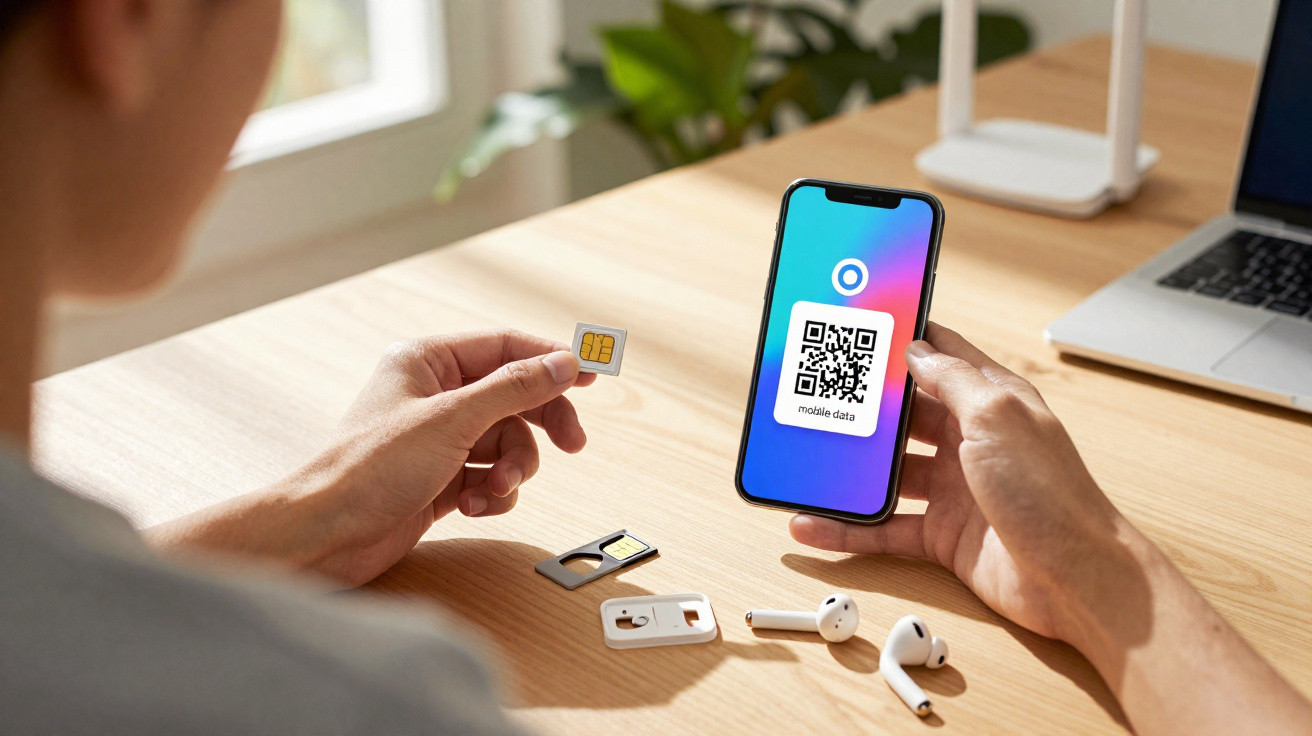
Smartphone technology has changed dramatically in recent years, introducing new acronyms that create a great deal of confusion when changing handsets or mobile plans. Understanding how the component responsible for your connection to the network operator works is essential for managing your personal device more effectively.
What is a physical SIM card?
The conventional SIM card, also called a physical SIM chip, serves as a subscriber identity module that links a phone to the mobile network. It must be inserted manually into the handset and holds vital information so that network operators correctly recognise your plan.
Despite being an established solution worldwide, the physical format has important structural drawbacks for modern handset design. Its dedicated tray takes up valuable internal room that could instead be used to increase the mobile phone battery.
Here are some of the most notable characteristics of this format, which has been used by customers for decades:
- Handling: It needs to be physically inserted and manually removed.
- Space: It uses an internal slot in mobile devices.
- Durability: It may wear out or develop poor contact.
- Switching: A new SIM card is needed when changing network operators.
- Security: It can be removed if the phone is lost.
How does virtual eSIM technology work?
The eSIM, or embedded SIM, is the digital evolution of the traditional SIM card and removes the need for physical components. It is soldered directly onto your smartphone's circuit board, enabling remote activation of data plans through digital settings.
This technology makes life considerably easier for frequent travellers, as it allows network operators to be changed without replacing the card. You simply scan a QR Code to register the new network profile, making the procedure extremely convenient.
Below is a video from Apple's YouTube Support channel that explores the points discussed in this subject in more depth:
What are the main advantages of eSIM?
Adopting the virtual format delivers unprecedented flexibility, letting users manage several lines on the same handset quickly. Without a physical slot, the device is more resistant to water ingress and everyday dust.
Agility
Immediate connection
Activation takes place instantly through software.
There is no reliance on physical deliveries for new plans.
Moving to the electronic model makes managing your line simpler, ensuring a smooth experience when changing plans. To make the most of this feature, consider several key points:
The technical benefits below make the virtual format a better option for new users:
- Remote activation using a QR Code.
- Support for multiple lines on the same mobile phone.
- Greater protection against loss or damage.
Why is the industry moving to eSIM?
Manufacturers continually aim to optimise the internal space in handsets so they can include more powerful components or larger batteries. By removing the SIM slot, companies gain valuable room for hardware innovations that set trends.
In addition to saving space, sustainability is a positive factor because it reduces the production of disposable plastics. This shift reflects a clear trend in which complete software and hardware integration is the market's top priority.
Several strategic advantages explain this gradual move from physical models to digital ones:
- Cleaner design and better sealing.
- Removal of unnecessary plastic parts.
- Real-time network operator updates.
How can you tell whether your mobile phone is compatible?
Compatibility with the virtual standard should be checked directly in the operating system's network settings. In general, newer models from various brands already provide this native support to ensure modern browsing.
If you are unsure, check the manufacturer's technical manual or visit the plans section of your preferred network operator. Using this technology correctly provides more streamlined, modern and considerably more efficient management of all your mobile services.
Read also: What the OLED abbreviation means on TV screens




Comments
No comments yet. Be the first to comment!
Leave a Comment