
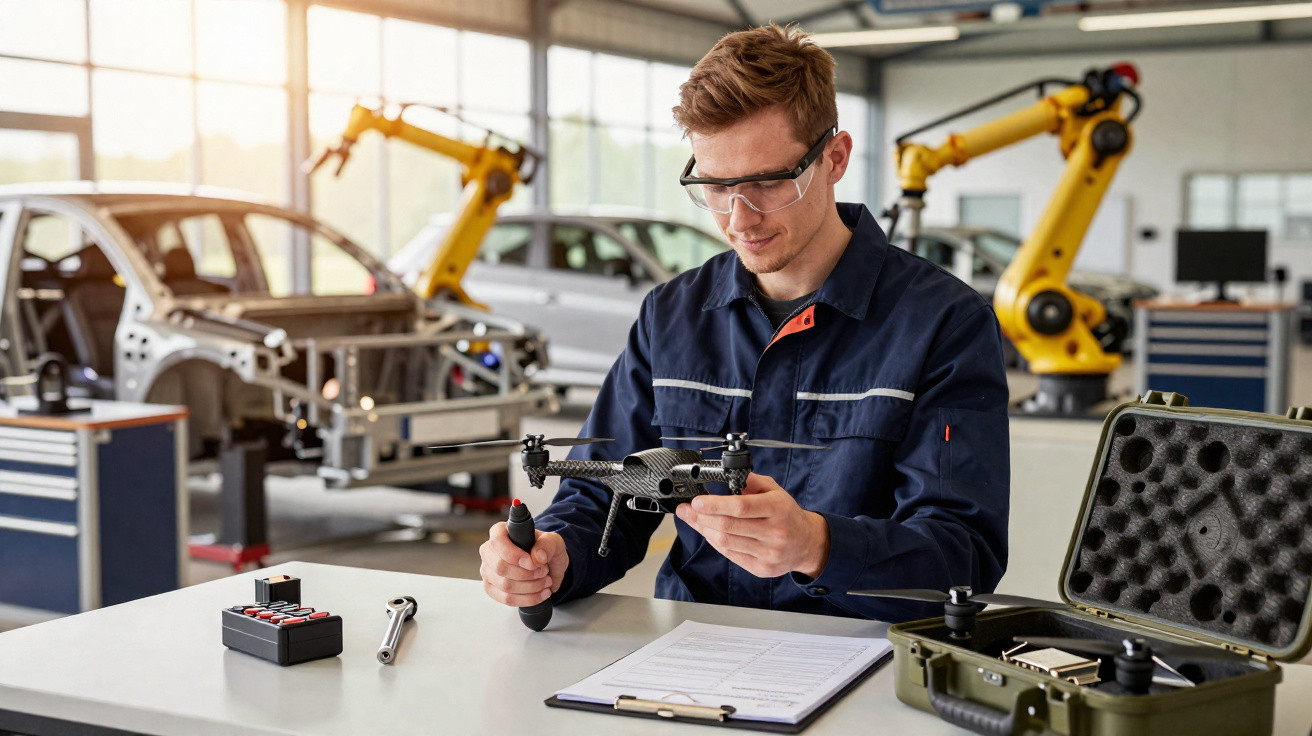
In a workshop normally alive with the hum of conveyor belts and the movement of robotic arms, folding tables are now arranged with drone controllers, headsets and monitors. The French army has moved into the Renault plant, where dozens of employees volunteering their time are being taught to pilot military-style drones with the same composure once required to weld, paint and assemble vehicles.
A car factory that hosts a drone school
For many years, the Renault plant on the edge of Le Mans has represented French industrial expertise, with a focus on chassis and components for commercial vehicles. For several weeks, however, sections of the facility have also served as a training site for military drone operators.
The programme forms part of a wider plan by the French armed forces to increase their pool of trained volunteers able to fly reconnaissance and support drones. Instead of relying solely on conventional military recruitment routes, the army is approaching industrial employees accustomed to precision, formal processes and shift patterns.
Between two production lines, a temporary classroom has appeared, where workers swap torque wrenches for radio controls.
Training is optional and brings no extra payment beyond employees’ usual wages, yet it has drawn an unexpectedly varied group. Assembly-line workers, maintenance engineers, forklift drivers and office staff all take part. While some are already reservists, others have never entered a military barracks.
“Drones or vehicles, it’s all the same”
For many volunteers, moving from car parts to drone controls proves less unfamiliar than an outsider might imagine. Their daily work already demands close attention to safety requirements, precise instructions and repetitive activities requiring sustained concentration.
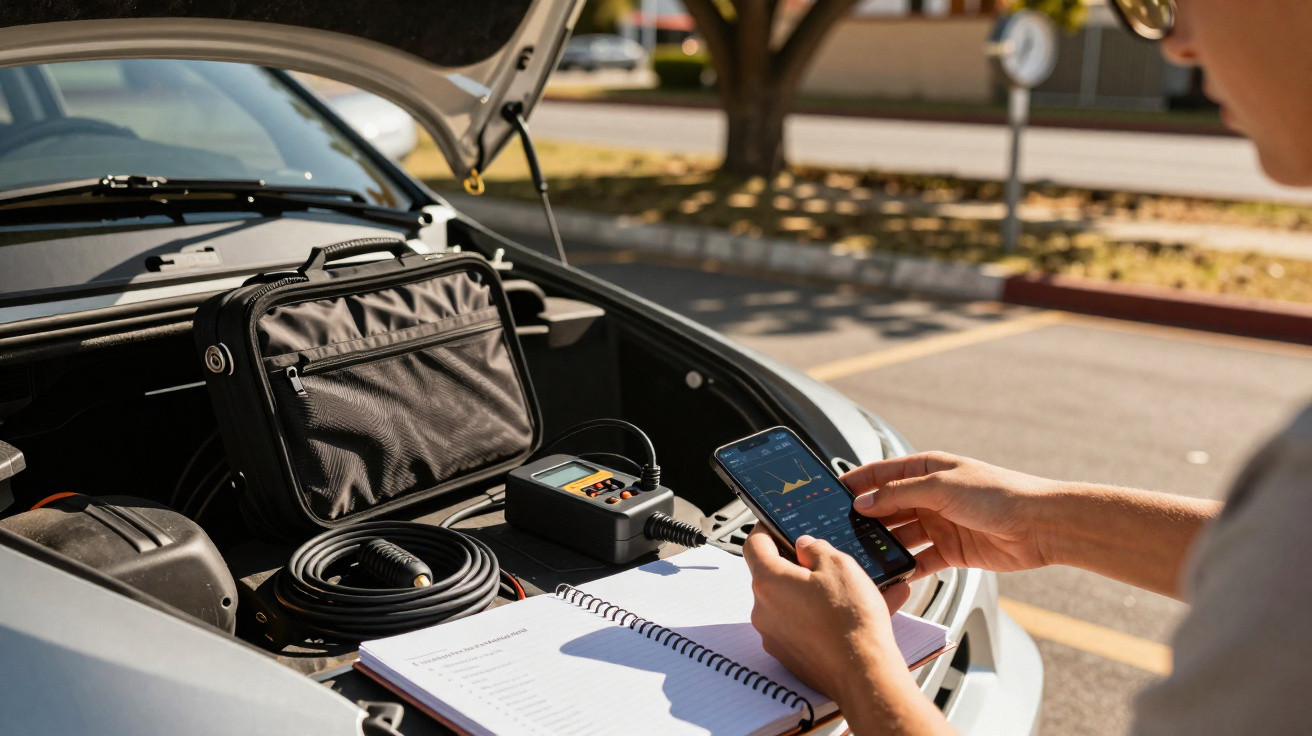
At the practice area - a closed-off car park behind the factory - instructors repeatedly cover the essentials: inspect the battery, understand the authorised flight area and keep the drone in sight. Renault employees recognise the checklist-based approach immediately.
One phrase circulates among the volunteers: “Drones or vehicles, it’s all the same – follow the procedure, respect the limits, stay focused.”
The parallel extends beyond the equipment itself. Factory roles have trained employees to view work as an interconnected system: much like a vehicle, a drone consists of linked hardware and software components. A fault in one element can compromise the entire operation. That way of thinking is readily applied to remote piloting, where planning ahead is more important than instinctive reactions.
From workshop gestures to joystick commands
Inside the classroom, illustrations explaining drone aerodynamics have taken the place of technical plans for chassis and axles. Trainers explain the principles of lift, drag and GPS stabilisation. Many employees understand these ideas rapidly, having already become adept at studying manuals and reading warning indicators on industrial equipment.
In hands-on training, participants are taught three main stages:
- Pre-flight inspections and briefings
- Take-off, navigation and mission delivery
- Landing, debriefing and incident reporting
Before long, volunteers identify links with their usual responsibilities. One maintenance technician compares calibrating a drone with setting the alignment of a robotic arm on a production line. An assembly worker equates interpreting telemetry on a screen with monitoring alerts on the control panel of a stamping press.
What the army is really looking for
The French army’s work at the Renault plant is not a public-relations exercise. It answers a practical operational requirement for more people trained to use small and medium-sized drones in observation, mapping and support duties.
Drone operators do not require the years of aviation training expected of fighter pilots. They do, however, need to be at ease with screens and data, and able to function under time-sensitive pressure. Industrial employees often possess those qualities and are already familiar with working within a strict command structure.
| Skill from factory | Use in drone training |
|---|---|
| Respect for safety procedures | Applies to no-fly zones and emergency protocols |
| Experience with automation | Helps in managing semi-autonomous flight modes |
| Shift work and fatigue management | Useful for long surveillance missions |
| Team coordination on the line | Transfers to crewed drone operations (pilot, spotter, analyst) |
In practical terms, trainees are taught to fly small quadcopters for straightforward reconnaissance, while also learning to assess imagery and report their observations without delay. The army gives judgment the same importance as proficiency with a joystick.
Ethical questions in the middle of the factory
The prospect of military drones being flown only metres from the place where vans and spare parts are produced does not sit comfortably with everyone at the plant. Coffee-break discussions can become heated. Some employees question how drones are used in contemporary conflicts, where the division between surveillance functions and strike capability may become unclear.
Others maintain that France must develop its own trained operators rather than become technologically dependent on allied countries. They point out that many drones used in these sessions are unarmed and intended for observation, search and rescue, or infrastructure surveillance.
Behind the practical lessons, a deeper debate runs through the canteen: what does it mean, morally, to lend industrial expertise to military aviation?
Union representatives are closely monitoring the scheme. They seek assurances over the voluntary nature of participation, working-time arrangements and protection from any pressure to enrol. Management has so far stated that involvement is entirely optional and has no bearing on career advancement.
A new link between factory and defence
For Renault, the partnership brings attention to a long-established, though frequently unseen, relationship between motor manufacturers and defence industries. The logistics capabilities that transport thousands of components around Europe every day can also sustain military supply chains. Engineers who reduce a van’s fuel consumption may similarly contribute to hybrid military vehicles or power systems for radar installations.
Drone instruction introduces a personal dimension to that connection. Rather than existing only through contracts and supply deals, the relationship now runs through individuals: workers who attend briefings on airspace rules after their shift or examine flight recordings on a laptop.
What “military drone” really means here
To many readers, the term “military drone” immediately suggests armed aircraft attacking targets far away. At Le Mans, the reality is more limited and technical. Training centres on small and medium-sized uncrewed aircraft designed to observe rather than attack.
Several expressions come up regularly during the sessions, and instructors carefully explain each one:
- UAV (unmanned aerial vehicle): the aircraft itself, without crew on board.
- UCAV (unmanned combat aerial vehicle): a drone specifically designed to carry weapons, not part of this training.
- C2 (command and control): the network and software used to plan, monitor and adjust drone missions.
- ROE (rules of engagement): legal and military rules governing how and when drones can be used operationally.
At the Le Mans facility, most training flights remain strictly within visual line of sight and under low-altitude limits. The purpose is to develop a reserve of people familiar with procedures and restrictions, allowing them to be incorporated into more advanced systems more quickly if a crisis arises.
From factory floor to hypothetical frontline
Instructors regularly lead trainees through exercises based on simulated scenarios. On one occasion, participants must respond to a mock industrial accident on a railway line. They use the drone to survey the site, locate “victims” represented by mannequins and send their coordinates. On another, they practise a natural-disaster response by flying over flooded land to determine which roads are still passable.
These drills are presented as dual-use: skills learned for military needs can also serve civil security, firefighters and rescue teams.
Each scenario carries a more sobering implication. During a major crisis, some Renault volunteers could be mobilised as reservists and sent to France or abroad to operate drones in supporting roles. Moving from the factory floor to a frontline command post would be a sudden change, but the training aims to reduce that shock with realistic drills and conversations about stress, tiredness and decision-making.
Benefits, risks and a changing idea of work
Volunteers identify several benefits: acquiring new abilities, finding a purpose beyond the next production target and feeling that they are contributing to national security. Learning drone technology could also create civilian opportunities in inspection, agriculture or infrastructure monitoring should their industrial careers change.
The potential risks are less obvious. There is concern that workplaces could become extensions of defence policy without meaningful public democratic discussion. Some fear the psychological effects if trainees later take part in missions with serious consequences. Others draw attention to the uncertain boundary between voluntary participation and social pressure, particularly within closely connected teams.
For the moment, Renault Le Mans drone training remains a small-scale trial within one factory. Even so, it signals a more fundamental change. As warfare becomes increasingly technical and networked, the separation between civilian industry and military capability continues to narrow. In Le Mans, that dividing line is now simply a gate separating a production line from a makeshift runway at the rear of the factory site.





Comments
No comments yet. Be the first to comment!
Leave a Comment