
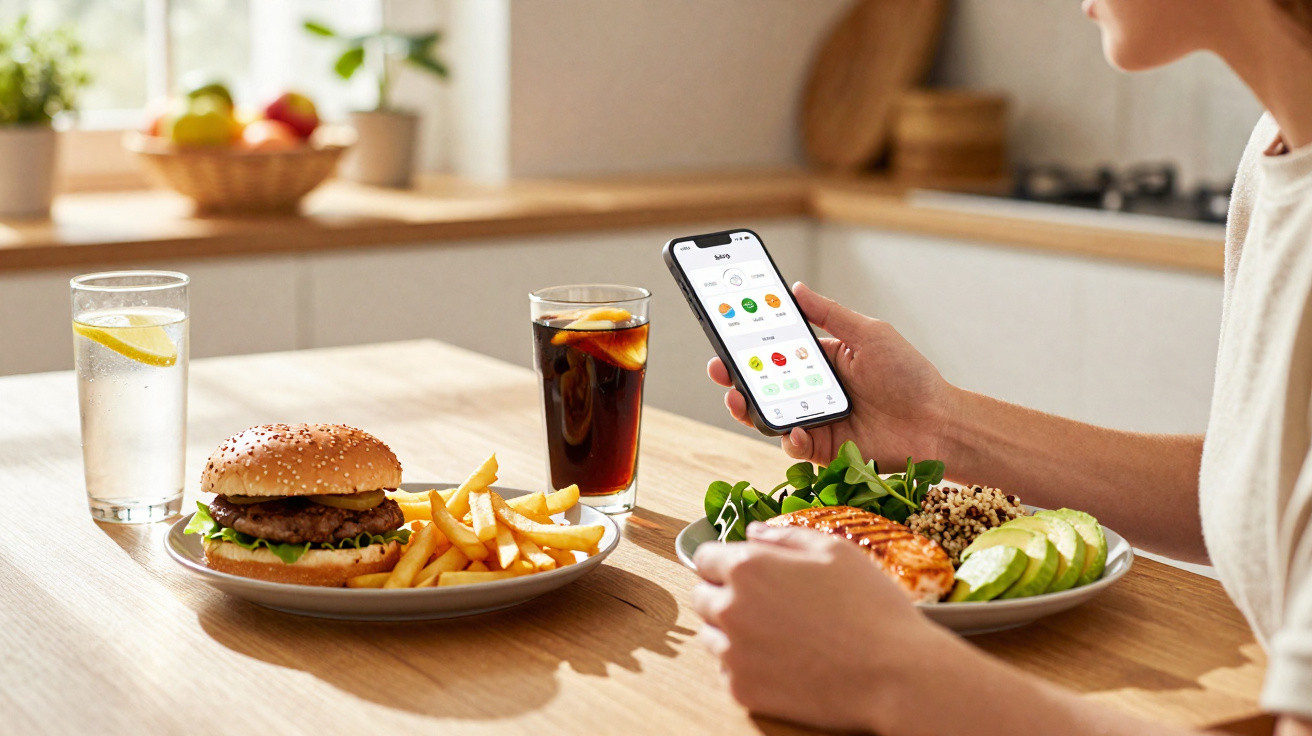
Nutrition apps have spent years advising people on what they should eat. Most create an ideal plate from the ground up, meeting nutrient goals while reducing processed foods.
That is the meal people are meant to eat, not necessarily the meal they prepare in real life.
Such advice has gained little momentum. A new study took another route: begin with the meals people already consume and identify the smallest change capable of making a meaningful difference.
The advice gap
The issue is substantial. A wide-ranging study covering nearly 200 countries found that poor diets are among the leading causes of diabetes, heart disease and other chronic illnesses.
Putting that knowledge into practice at the evening meal, however, is far more difficult.
Trevor Chan and Ilias Tagkopoulos, computer scientists at the University of California, Davis (UC Davis), believed the scale of the required change was the real obstacle.
Many diet apps call for a complete dietary reset, and that reset is often what people abandon.
The researchers deliberately set a more modest aim.
Instead of constructing a perfect plate from scratch, they sought to take foods people already eat and steer them towards healthy eating through as few alterations as possible.
Learning from meals
To understand what Americans actually serve themselves, the researchers used What We Eat in America, a longstanding federal survey.
It contained records of more than 135,000 meals reported by over 55,000 adults.
After examining the data, the model sorted meals into 34 familiar meal patterns, including a cereal-and-milk breakfast, a deli sandwich lunch and a pizza dinner.
A generative AI programme then learned how to create new meals that matched each pattern.
The programme handled two jobs simultaneously. It selected foods that made sense together and altered serving sizes to move every meal closer to federal nutrition guidelines, while retaining the appearance of a meal someone would realistically eat.
AI meal swaps closer to healthy eating targets
When the researchers compared their generated meals with real meals in the equivalent pattern, the artificial versions were healthier. They reduced the distance from federal nutrition targets by about 47 percent.
The improvements were tangible. The generated meals contained more fibre, protein and potassium, while vitamin shortfalls were addressed, yet they retained the broad appearance and flavour of the original meals.
One measure moved in the opposite direction. Sodium increased slightly in certain lunches and dinners, underlining that no single adjustment can improve every nutrient at the same time.
A few simple swaps
Previous tools could produce a healthy menu from the beginning. None had identified the minimum adjustment to a meal already being eaten: a small number of carefully selected food swaps.
The researchers tried replacing one, two or three items in each meal. The most frequent changes were straightforward: add vegetables or legumes, and remove the saltiest or most highly processed components.
Benefits increased with the number of changes. One swap improved a meal’s nutrition by around 5% and reduced its modelled cost by roughly a fifth.
With three permitted swaps, meals were about 10% healthier and cost nearly a third less.
The resulting meals remained recognisable. For example, a fatty side dish could be replaced with beans, or additional greens could be included.
The intention is not to reinvent dinner, but to create a lighter version of the same meal.
Better than chatbot guidance
Any AI food tool raises an obvious question: why not simply ask a chatbot?
The team tested this directly, comparing its specialised model with GPT-4o, the most capable general chatbot available at the time.
The purpose-built model performed better in the areas that mattered. It matched federal targets for the balance of protein, fat and carbohydrates much more consistently.
The chatbot tended to suggest meals high in fat and low in carbohydrates. This difference reflects a broader trend.
A recent review of chatbots providing dietary advice found that their recommendations were inconsistent and sometimes incorrect, indicating that models built with nutritional rules may have an advantage over free-form chat.
Limitations of the study
The study has a significant limitation: every result exists solely within a computer model.
Nobody has cooked or eaten these meals, and the researchers have not tested whether people can realistically sustain the proposed swaps over time.
The data carry inherent biases as well. Participants self-reported what they ate, and people are known to underreport less healthy foods while exaggerating healthier choices.
Likewise, the projected savings are based on modelled menus rather than real supermarket receipts.
The authors do not make excessive claims. Instead, they identify one consistent message across the findings.
“Healthier eating does not have to mean giving up the meals people already enjoy,” the researchers noted.
What could change
The new element is the modest scale of the intervention. A meal does not require a complete redesign.
Just one or two carefully chosen swaps can bring it closer to the guidelines while lowering the cost at the same time.
The practical implications are clear. A grocery app could recommend one replacement at checkout rather than prescribe an entirely new diet, while a public-health programme could provide less expensive, healthier versions of meals people already make.
Eventually, the same system could support the tools used by dietitians, recommending adjustments that a patient may be able to sustain.
The wider lesson is straightforward: eating better may depend less on willpower than on making the right small change.






Comments
No comments yet. Be the first to comment!
Leave a Comment