
Hybrid vehicle high-voltage battery lifespan
The high-voltage battery is the costliest component in a hybrid vehicle, so its service life is a central concern for every owner. Most manufacturers engineer the battery for a lifespan comparable with that of the vehicle itself, although real-world figures indicate a range of 160,000 to 320,000 km.
Factory warranties provide an indirect indication of expected durability. In the United States, the minimum cover is 8 years or 80,000 miles, while states applying CARB rules require 10 years or 150,000 miles. Toyota and Hyundai go further by extending warranty cover for their hybrid systems. This demonstrates the brands’ confidence in battery longevity, although it does not rule out failures.
What causes high-voltage battery degradation
Battery deterioration can occur for several reasons. Some failures stem from manufacturing defects in individual cells or modules, which cannot be predicted in advance. Extreme temperatures are also harmful: sustained heat accelerates ageing, while leaving the vehicle in direct sunlight without ventilation makes the issue worse. Manufacturers deliberately restrict the usable charge range to extend service life, but capacity loss can nevertheless become critical over time.
Signs of a failing hybrid battery
Approaching problems may be indicated by poorer fuel economy, less frequent activation of electric mode, inaccurate charge-level readings or error messages. In some cases, the hybrid will not start, because the electric motors use the high-voltage battery pack to start the internal-combustion engine.
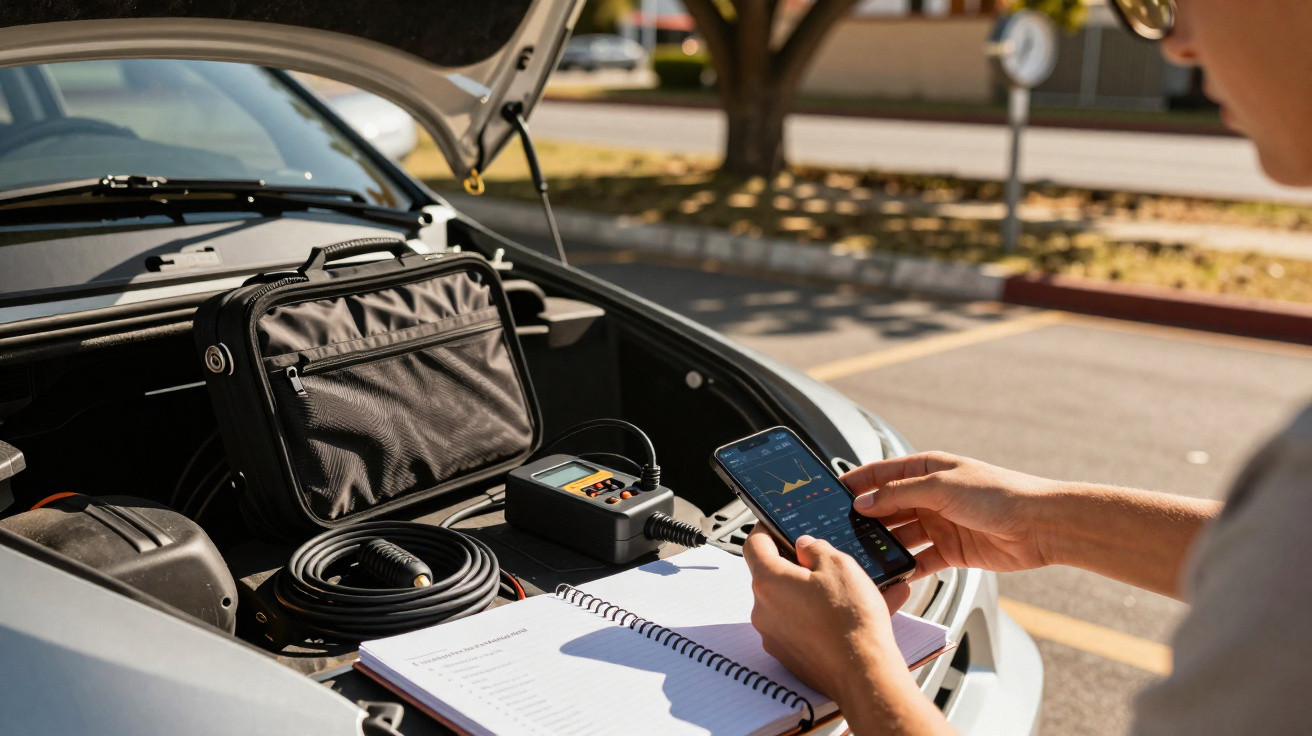
Anyone buying a used hybrid should arrange battery diagnostics before completing the purchase. If a module is nearing the end of its service life, this should be reflected in the price.






Comments
No comments yet. Be the first to comment!
Leave a Comment