
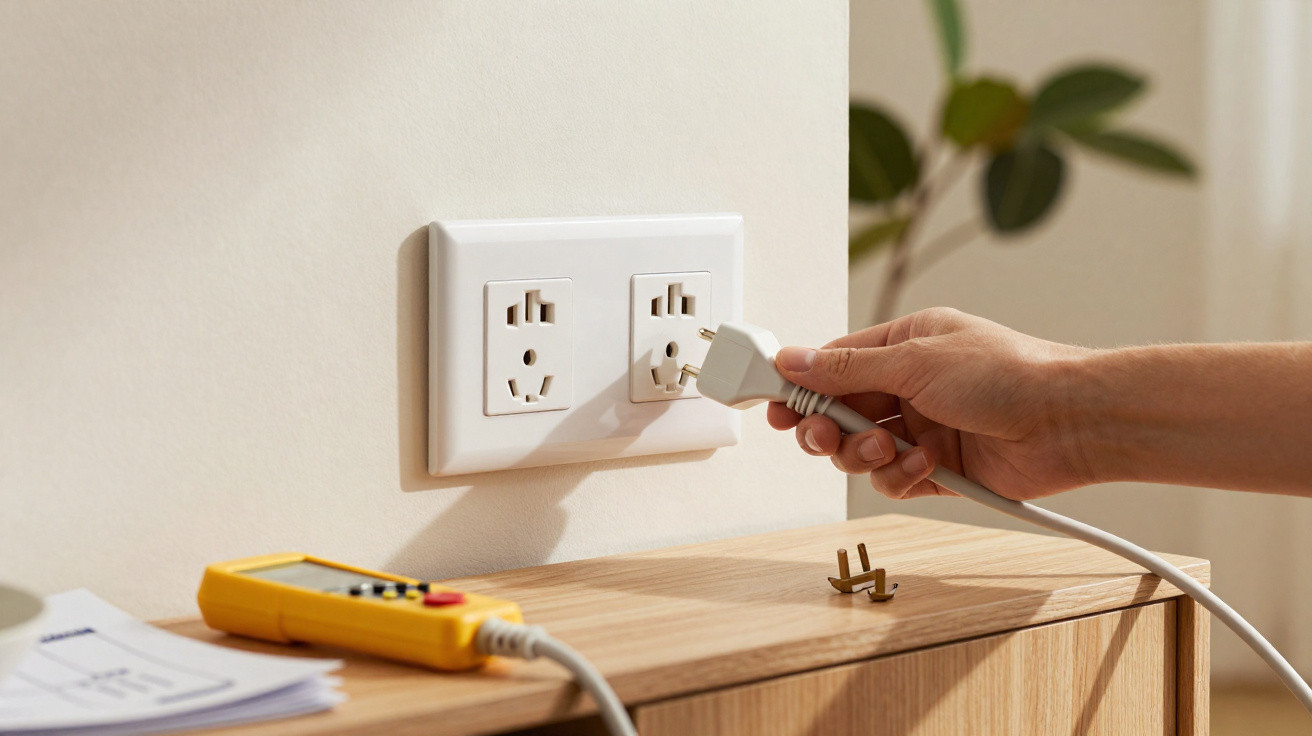
Sockets are part of everyday life, yet few people stop to consider the details of the two holes and the well-known three holes found on certain models. This straightforward arrangement reflects engineering choices, electrical safety measures and standards that have developed over time in Brazil. Understanding these features makes it easier to see what lies behind such a familiar fixture on the wall.
Why do sockets have two holes, and why does the third point change everything?
Sockets with two holes originated from an older standard for a simple electrical connection, designed solely for live and neutral conductors. This format was widespread in homes for decades and remains common in many older properties.
As more sensitive appliances came into use, the third contact became increasingly common, adding another level of protection and stability to everyday operation.
- The two holes provide the basic route for electricity;
- The third contact serves as a safety reference;
- Modern equipment requires greater electrical stability;
- The standard changed to lower the risk of electric shock.
Many older electrical installations still have only two holes, illustrating how the development of sockets has followed changes in energy consumption.
What does the third hole show about electrical safety?
The three holes in sockets are directly associated with earthing, a system that channels unwanted currents into the ground. This feature prevents an appliance casing from becoming live if a fault occurs.
Without this protection, the likelihood of electric shock is greater, particularly with metal appliances or higher-power equipment.
- Lower risk of electric shock during internal faults;
- Protection for appliances against power surges;
- More stable operation for sensitive electronic devices;
- Safe routing of excess current.
Using three holes has become essential in modern projects, underlining the value of more comprehensive standards for household sockets.
How do two holes remain in older electrical installations?
Two holes are still found in many homes because their older infrastructure has not been upgraded for more recent socket models. As a result, the basic standard continues to be used.
Despite its limitations, this type remains suitable for simple appliances that do not need earthing.
- Older installations without an earthing system;
- Low-power equipment that does not require additional protection;
- Easier maintenance in older electrical networks;
- Compatibility with earlier building standards.
During refurbishments, converting two holes to the more modern socket standard often requires alterations to the internal wiring.
Is there a technical standard behind modern sockets?
The current socket system follows standards intended to standardise safety and operation across Brazil. Three holes have become a mandatory component of this framework in new installations.
This standardisation makes it easier to use appliances manufactured in different regions, while reducing electrical compatibility issues.
- Consistent formats in new buildings;
- Greater compatibility between electronic devices;
- Fewer makeshift electrical installation solutions;
- Standardised safety in residential projects.
Even with this progress, two holes are still present in older settings, creating a coexistence between different generations of sockets.
What do these differences reveal about the evolution of electrical connections?
Changes in sockets demonstrate how domestic electricity has adapted to accommodate more appliances and higher consumption. Three holes represent this shift towards protection and efficiency.
Two holes, by contrast, remain as evidence of a simpler stage in electrical installation, when the priority was merely to transmit electricity without so many additional safety devices.






Comments
No comments yet. Be the first to comment!
Leave a Comment