
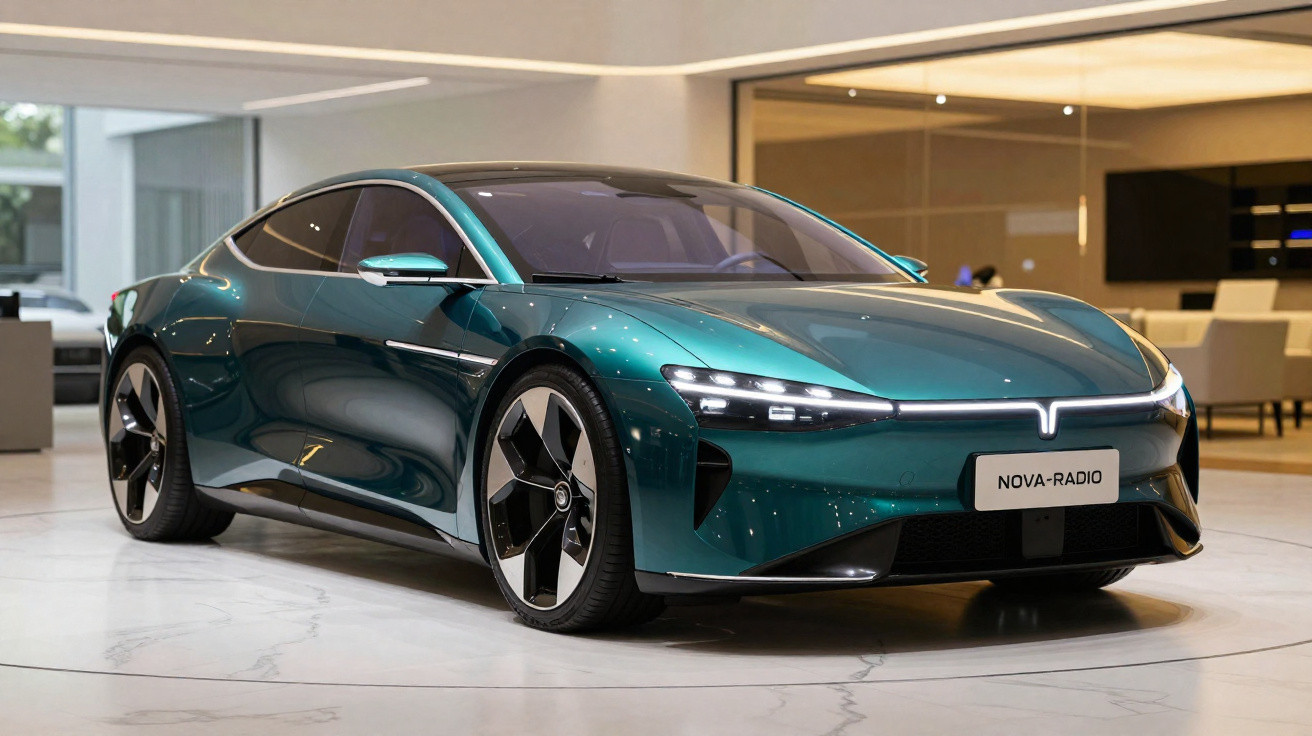
Arcom has warned that radio could be pushed to the margins as a medium.
Car radios are part of the everyday lives of millions of motorists, yet they are no longer fitted as standard in every vehicle. Arcom is raising concerns over the removal of this equipment from new cars by several manufacturers, notably Tesla with its Model 3 and Model Y.
Elon Musk’s company is far from alone in making this decision. As Mac4ever points out, Dacia has removed it from the “Essential” version of its Spring, while Citroën has done the same on certain C3 versions. Instead, an increasing number of drivers rely on a smartphone connected through CarPlay or Android Auto.
At the start of the year, Romain Laleix, the Arcom board member responsible for radio matters, published an opinion piece in Les Échos to sound the alarm. In his view, if this trend gathers pace, it poses an obvious threat to radio as a medium: “The absence of a car radio in vehicles would amount to the immediate marginalisation of the medium and its disappearance in the short term.”
Arcom seeks to protect radio as a “common good”
DAB+ technology, which Laleix likens to Freeview for radio, still enables stations to be heard in suitably equipped cars under European law requiring it. However, companies could attempt to circumvent the rules and remove radio from vehicles altogether.
Such a direction would be disastrous for the sector, given that 30% of all radio listening takes place in cars. Romain Laleix speaks on behalf of the “1,200 radio stations present across the entire national territory, in mainland France and the overseas territories” regulated by Arcom. He adds that “radio is by its nature the universal medium, the voice of those who would not be heard without it” and that it is “the world’s first free medium and, in some countries, the only one.”
Tesla, Dacia and Citroën: ensuring access to radio
To avert the worst-case scenario, Arcom board members want action at European Union level: “The drafting of the European regulation on digital networks must be an opportunity to require car manufacturers not only to install a receiver in vehicles, but also to genuinely guarantee access to radio, through a clearly identifiable button or application on dashboards.”
According to Laleix, this issue should not be seen as remote or bureaucratic, because it has tangible consequences:
Behind these legislative battles, which may seem far removed, what is at stake is nothing less than the future of our radio stations and of those who keep them alive, both on air and behind the scenes. It is also the future of a unique cultural model that guarantees every citizen access to reliable information, a diverse cultural offering and local services. More than ever, let us defend free, anonymous and universal access to radio, so that everyone’s medium remains a common good!
The message has been delivered, and the warning could hardly be clearer.






Comments
No comments yet. Be the first to comment!
Leave a Comment