
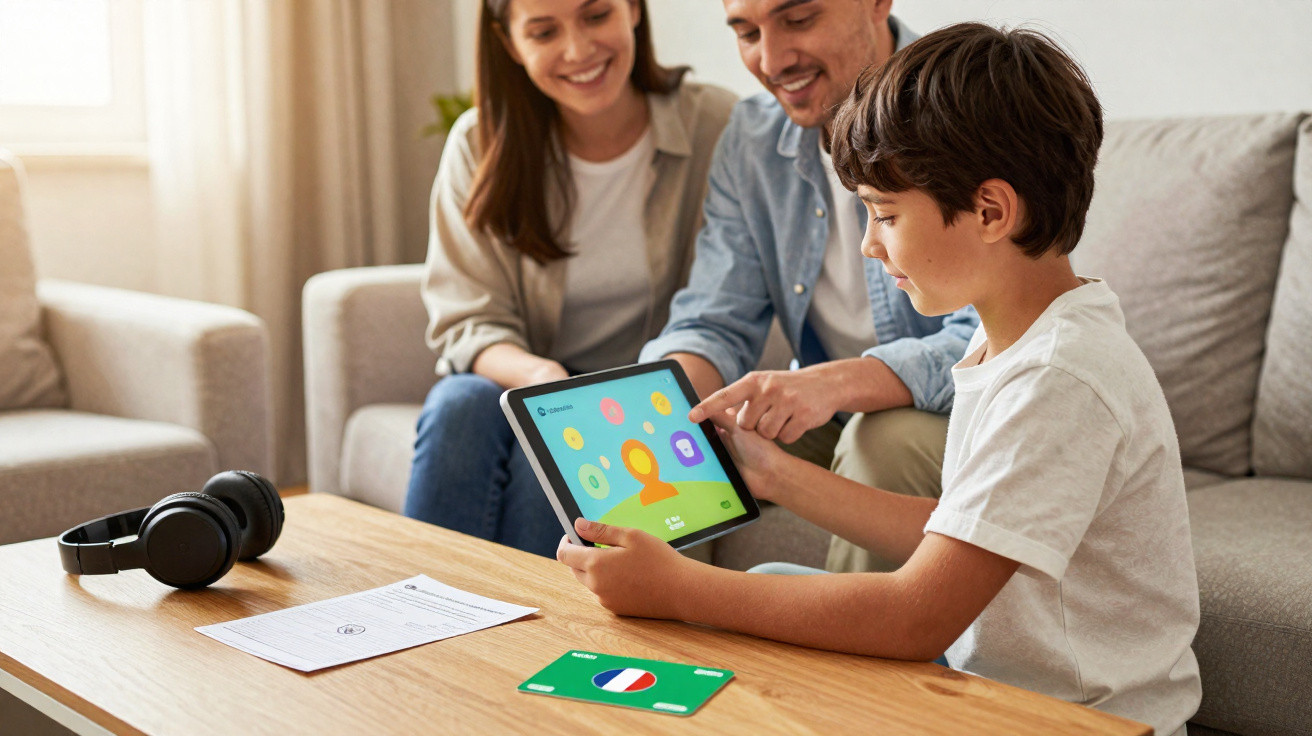
Poppins, a video game created to help dyslexic children improve their reading, will soon be reimbursed through the French social security system.
Could video games be covered by social security? This does not concern mainstream releases such as GTA 6 or Forza Horizon 6, but therapeutic software. Poppins, a game made for dyslexic children, is set to become one such product. According to Siècle Digital, the French National Authority for Health has approved reimbursement. The Ministry of Health must still give its approval, although there appears to be no reason for it to decline. The first reimbursements are therefore expected from the start of the new school year, provided a prescription is supplied.
Reimbursement naturally means that the game is paid for. Poppins is not an ordinary Android game: it is software developed with doctors for tablets and smartphones. Access requires a €39 quarterly subscription, which is the amount due to be covered. However, a child receiving this reimbursement must also be monitored by a healthcare professional.
Poppins: a therapeutic game for dyslexic children
Poppins has been designed for dyslexic children aged between 7 and 12. Through mini-games, it aims to support young people with “dys” conditions while they are waiting for specialist care. These activities help them develop reading rhythm, coordination, accuracy and phonological skills. Children use it for 20-minute daily sessions, after which the app closes. This lets them make progress while having fun.
Therapeutic games are not new
Therapeutic video games have existed for a long time. The first health-focused “serious games” appeared during the 1980s. One of the best-known examples is Quest for the Code, released in 2002 for children with asthma. Another is EndeavorRx (2020), a game for attention disorders that has been approved by the FDA in the United States. This is an important part of the video game industry, although it tends to receive little attention. In the past, some more mainstream publishers have nevertheless attempted to focus on health through titles centred on wellbeing. Nintendo did so in the 2000s with games including Dr Kawashima and Wii Fit.
A medical software package presented as a video game
Poppins clearly does not belong in that category. While it is a video game in the conventional sense, with gameplay and objectives, its primary purpose is therapeutic rather than commercial. It is medical software packaged as a video game to hold children’s attention, an approach that works.

Comments
No comments yet. Be the first to comment!
Leave a Comment