
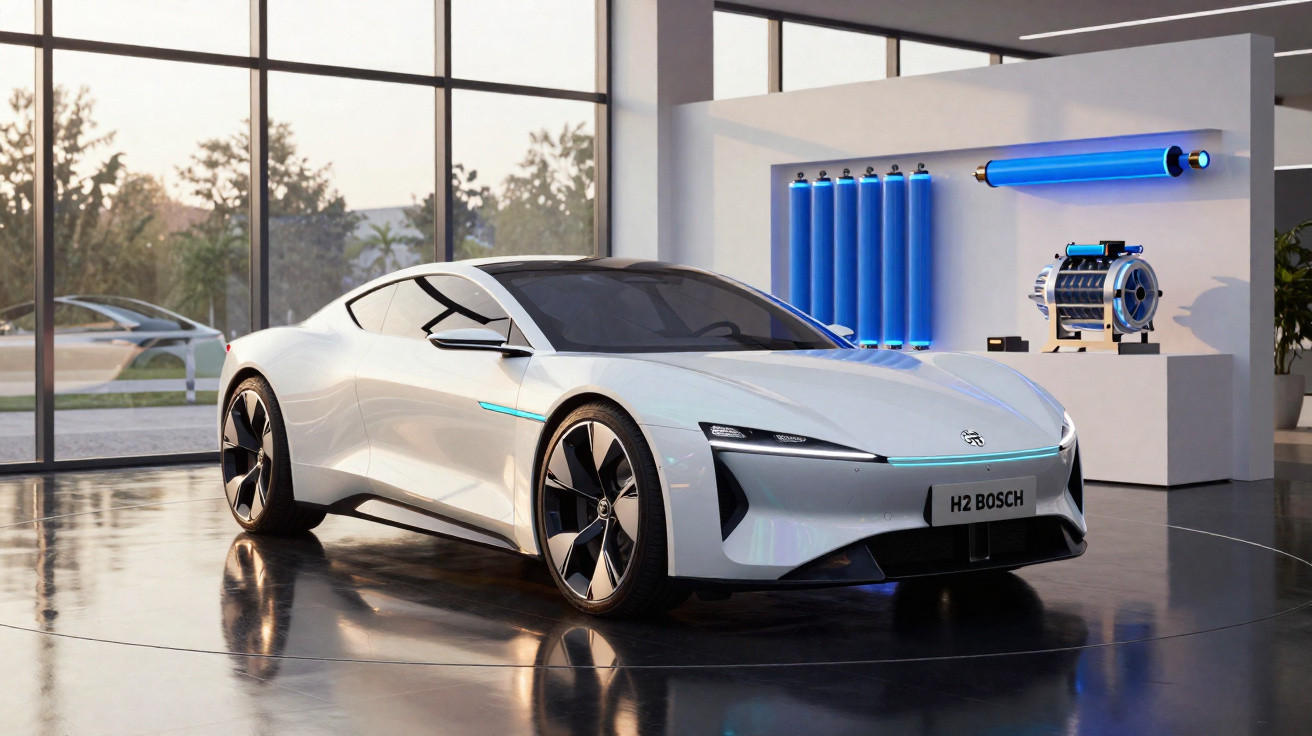
There are alternatives to electrification and batteries. That is the message conveyed by Bosch’s plans for what it describes as the beginning of the “hydrogen mobility era”.
The technology giant, and one of the automotive industry’s largest suppliers, is already halfway through a €2.5 billion investment in hydrogen technology.
The investment programme began in 2021 and will run until 2026. So far, it has created 3,000 dedicated jobs, half of them in Europe.
Its investment covers both the development and manufacture of hydrogen fuel cells and the creation of systems for hydrogen internal-combustion engines.
Bosch will also begin producing hydrogen from next autumn. Initially, this will take place through pilot projects, before volume production starts in 2025.
By 2030, Bosch aims for its hydrogen technology activities to generate revenue of around €5 billion.
“Only hydrogen can deliver a carbon-neutral world. For Bosch, that is crystal clear.”
- Bosch statement
Bosch hydrogen fuel-cell production is already under way
The first tangible outcomes of this investment will not take long to arrive. Bosch started manufacturing fuel-cell systems at its Stuttgart-Feuerbach site in Germany in July.
The first hydrogen fuel cells will be supplied for Nikola’s electric lorries - FCEVs, or Fuel Cell Electric Vehicles. The US manufacturer will begin selling them in the United States during the final quarter of 2023.
As well as its in-house production, Bosch will manufacture fuel cells in Chongqing, China. It also intends to produce them at its Anderson plant in South Carolina, United States.
Hydrogen replaces diesel in the combustion engine
Alongside hydrogen fuel cells, Bosch’s strategy for decarbonising heavy goods vehicles includes developing technology for internal-combustion engines fuelled by hydrogen rather than diesel.
These technologies focus particularly on indirect and direct fuel-injection systems for hydrogen combustion engines. The company considers this the ideal solution for long-haul lorries.
“A hydrogen engine can do everything a diesel engine can do, but the best part is that it can be carbon-neutral. It also enables a rapid and cost-effective entry into hydrogen-based mobility.”
- Markus Heyn, Bosch management board member and president of Bosch Mobility
Bosch injection systems for hydrogen engines
The key advantage of using hydrogen as a fuel in combustion engines is that 90% of the required technology development and production is already in place. The principal difference from today’s diesel engines lies mainly in their injection systems.
Bosch expects to launch its hydrogen combustion engine in 2024 and says it already has four orders for production projects. By 2030, it anticipates “six-figure” production volumes for this solution.





Comments
No comments yet. Be the first to comment!
Leave a Comment