
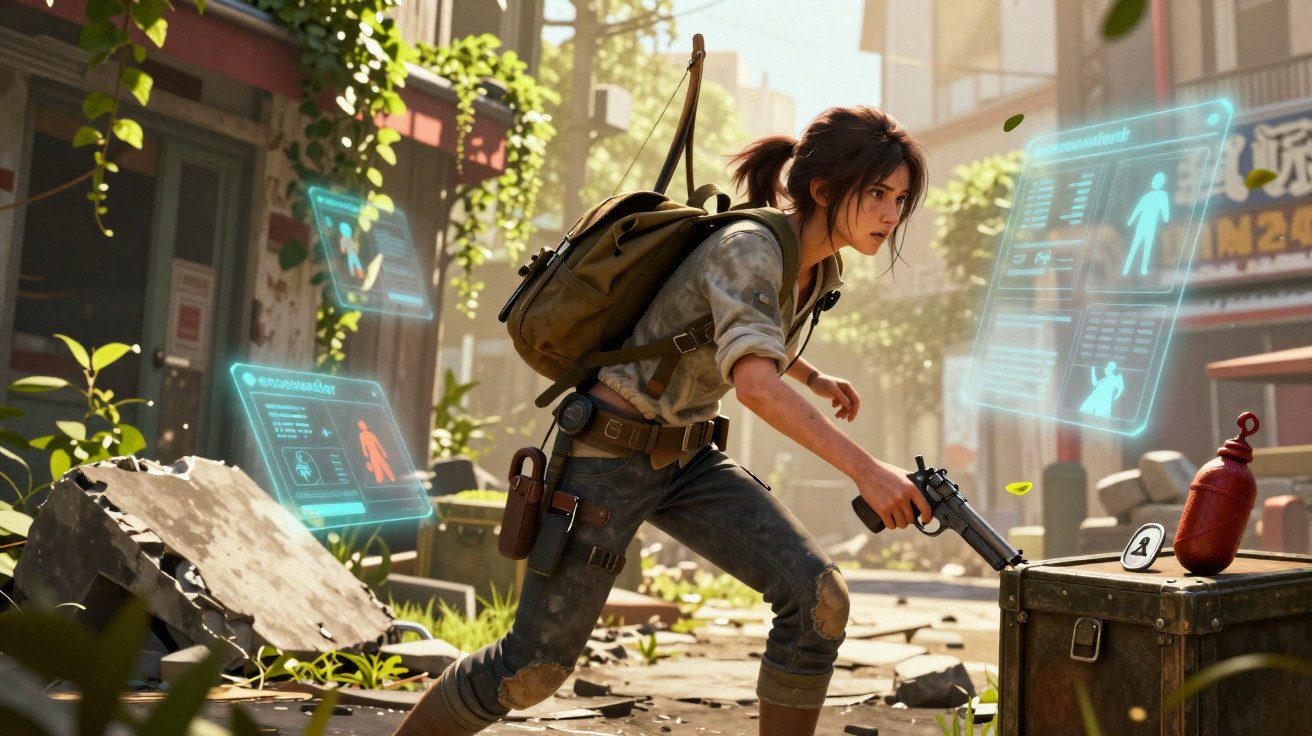
The Last of Us Part II Remastered and No Return
More than three years after its PlayStation 4 debut, The Last of Us Part II is receiving the full remaster treatment this January, following the path set by its predecessor. The refreshed release makes use of PlayStation 5 hardware through enhancements including native 4K resolution, upgraded textures and an unlocked frame rate. It also introduces interactive extras, from developer commentary to previously inaccessible lost levels. Its most significant new feature, however, is a mode named No Return.
This roguelite experience lets players select one of 10 characters and face a randomised chain of combat scenarios. The roster ranges from central figures Ellie, Abby and Joel to previously non-playable characters such as Tommy, Dina and Lev. I visited Sony Interactive Entertainment’s San Mateo, California, office to play several No Return runs and talk with The Last of Us Part II Remastered director Matthew Gallant about why Naughty Dog chose to add this unexpected mode.
At first, I presumed No Return had been planned for the original The Last of Us Part II but was ultimately cut. Gallant explains that Naughty Dog came up with the mode only after deciding to update the sequel. “We're like, okay, we knew we were going to be doing this next-gen upgrade and offering the PS5 improvements and the fidelity and the performance mode, haptics, and all that really great stuff,” says Gallant. “That was for sure going to be in The Last of Us Part II Remastered, but then we were thinking, ‘What else would be really great? What would surprise people, delight people, give them something to make this a really robust offering?’”
Naughty Dog sought a feature that could exploit the game’s excellent combat while carrying stakes comparable to The Last of Us Part II’s Permadeath setting, where a single death forces a complete restart. The studio also wanted players to keep adapting their tactics and behaviour; Gallant felt that many people had settled into preferred builds and approaches by the later stages of the campaign. A run-based, randomised roguelite structure became the obvious solution. “We thought that this roguelike mode [would] be a really great way to surprise players, get them thinking on their feet again, throw them into situations where they might be uncomfortable having to react or to plan on the fly,” says Gallant.
No Return characters, traits and the hideaway
When I begin a fresh run, only two characters are available: Ellie and Abby. Every character has their own style and specialised traits. Ellie is labelled “Balanced,” making her a versatile choice; her three traits grant 50 percent more supplements, let her craft Molotovs - a recipe other characters need to unlock - and provide two upgrade branches. Abby is a Brawler, so her blows hit harder, while one of her traits is health regeneration that replenishes HP whenever she lands a melee strike. Dina is particularly strong at crafting, reflecting her ability to repair the WLF radio in the story. Lev, whom I unlock later, is focused on stealth and begins automatically equipped with his quiet, powerful bow. Yara’s trait lets Lev join her as an AI companion, though she starts with only a basic firearm, which makes her upgrade route longer by default.
I select Ellie and start my run in the hideaway. This headquarters can appear in different locations, and includes a workbench for weapon upgrades plus a trading post selling a randomised assortment of guns and tools that changes with every visit. If the current stock does not appeal, I can reroll it by paying a small amount of currency. My starting kit consists of a pistol, a knife and a few health packs. A corkboard maps out the active run as a branching network of levels, represented by Polaroid photographs showing their respective conditions.
Randomised combat encounters and modifiers
My first match is Assault, requiring me to clear three enemy waves. Although charging in loudly is an option, I quietly pick enemies off instead, just as I usually did during the story campaign. After three years away, I am immediately reminded how satisfying the combat feels. The action remains vicious, and the grim sound effects make me wince again as my knife cuts through throats or a bat crushes a skull. Human opponents still react in anguish by crying out the names of their dead allies when they find what I have done (“No! Mike!”).
The Last of Us Part II’s disturbingly grounded violence contrasts with No Return’s more overtly game-like additions. Because of Abby’s health-regeneration trait, health icons burst from enemies whenever she hits them. Some level modifiers are deliberately silly: one turns every enemy invisible, leaving them detectable only through listen mode or by using a torch to reveal their shadows. Gallant, who worked on the original game’s Part II combat, says Naughty Dog has always prioritised grounded combat in the series, but No Return’s non-canonical status gave the team room to be less restrained.
“We know our combat mechanics are really fun, we know our gameplay is really fun, [and we’re] trying to give that its own space to be fun and not quite as heavy as the main story,” says Gallant.
As I eliminate enemies - including human groups such as the WLF, Seraphites and Rattlers, as well as multiple infected varieties - I search each area for crafting materials. Resource chests are marked with an indicator and can appear in varying locations within a level, offering bigger rewards to anyone willing to risk reaching them.
After progressing through the web of areas, I eventually arrive at its conclusion: a boss fight. A huge Bloater confronts me alongside several Clickers, and, rather embarrassingly, I die within a few minutes. I did not have an opportunity to take my revenge, although I might not have faced that same boss again anyway. Other possibilities include a Seraphite Elite or a Rattler Captain, both new encounters absent from the campaign.
Dying sends me back to the beginning of an entirely new run. It is discouraging, though I know the route will not play out as it did previously. Levels can sometimes feature modifiers, such as dense fog that makes enemies harder to see while also hiding you more effectively, or dangerous spore pustules falling from above. At other times, tripwires are scattered throughout the arena. Certain levels supply an AI companion for support; while playing as Ellie, I tackle one mission alongside Dina in a tag-team pairing. Other match types include Hunted, which overwhelms players with an unending stream of enemies and asks them to survive until the timer runs out. The type of some levels is hidden behind a mystery-zone label, so you do not know what awaits until you enter.
“If you don't make it out of the situation…knowing that the game's going [to] be just rolling this entirely new random run at you, it's going [to] be rolling all these new challenges, new combinations of stuff that you wouldn't have expected,” says Gallant. “So [it] just makes coming back to the combat and running into new situations and new combinations just really exciting and really fun.”
Challenges, Custom Runs and replayability
A challenge list adds further goals, with completion unlocking additional characters, outfits, modifiers, weapons, recipes and more. For instance, I unlock Lev after finishing two levels as Abby. I also gain access to Gambits, which present one riskier challenge per encounter in exchange for substantially better rewards. Naughty Dog has designed No Return to keep developing and broadening as players invest more time, helping it remain fresh over the long term.
Numerous difficulty settings allow No Return to be made as accessible or punishing as players wish. The Custom Run option goes further, letting players shape a run by choosing which modifiers, perks and match types can appear. Gallant believes that this ability to tailor No Return, combined with the chance to play fan-favourite characters - most of whom have never been playable before - will give the mode strong appeal even for fans who do not normally play roguelites.
As someone who enjoys both The Last of Us Part II and roguelites, I found No Return to be an entertaining combination of ideas that works better than expected. Its shifting challenges, enjoyable modifiers and the pressure of losing an entire run to one error extract even more from combat that was already compelling. Above all, it serves as a satisfying, substantial dessert after the campaign’s hearty main course, which Gallant advises completing before trying No Return. I am not certain I am ready to put myself through The Last of Us Part II’s emotionally demanding story again, so I appreciate that No Return lets me enjoy its gameplay without that strain.
The Last of Us Part II Remastered launches for PlayStation 5 on 19 January.




Comments
No comments yet. Be the first to comment!
Leave a Comment