
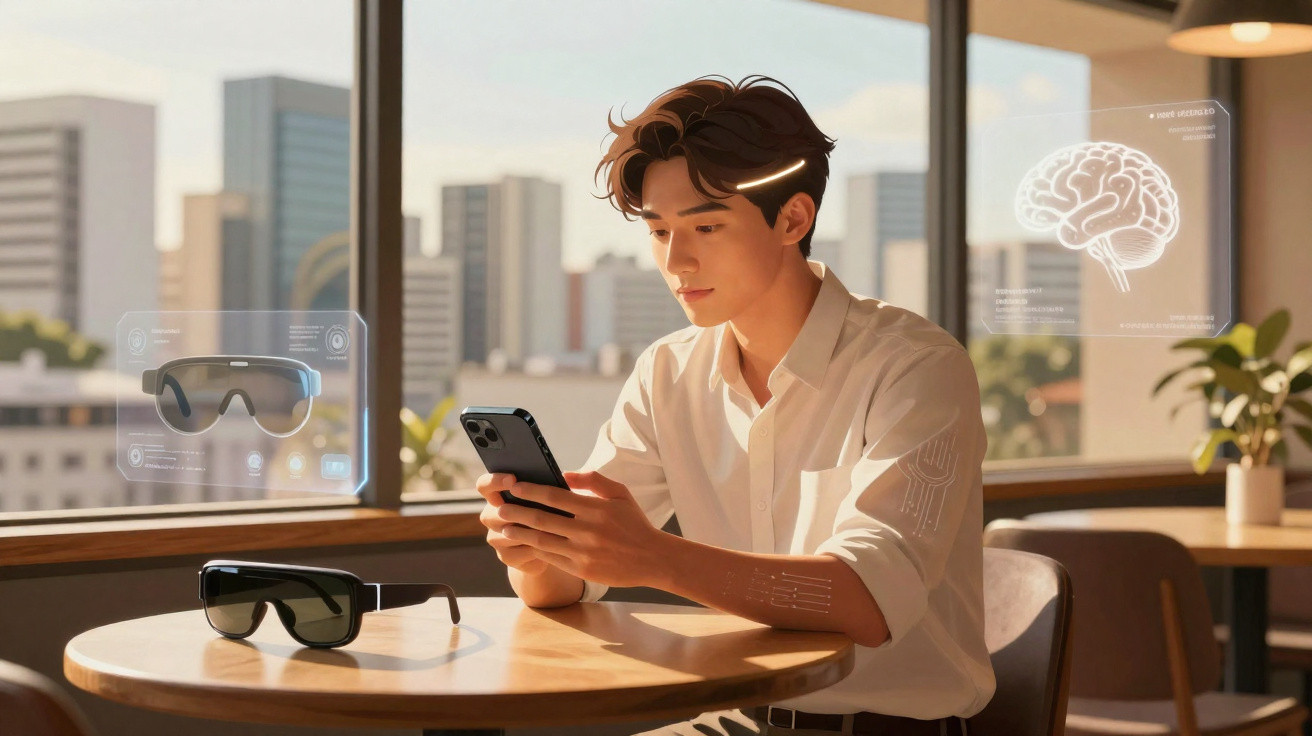
Three of the planet’s most influential billionaires are betting on a future without mobile phones, yet Apple’s chief executive is following a different playbook.
While Elon Musk, Bill Gates and Mark Zuckerberg openly discuss the death of the smartphone, Tim Cook is taking the opposite approach: strengthening the iPhone’s central role and backing a slower transition, in which emerging technologies live alongside the device that has dominated our pockets for more than fifteen years.
Two decades of dominance under pressure
The smartphone as we know it today may seem permanent, but its history is comparatively brief. The first device marketed as a “smartphone” appeared in 1992: the IBM Simon, a bulky touchscreen handset that combined a telephone with electronic diary functions. Since then, the concept has developed, chips have shrunk, camera quality has improved dramatically, and the mobile phone has become the remote control for digital life.
Every technology cycle has an expiry date, even if no one knows precisely when it will arrive. Musk, Gates and Zuckerberg believe that moment is much closer than the market expects. Cook does not.
“The clash is not merely about gadgets. It is about who will control the next major gateway to the internet, data and advertising.”
What could replace the smartphone?
The shared view of the three billionaires begins with the same assumption: the smartphone stands between the user and the digital world. If the interface can become more direct, the handset loses its purpose.
Elon Musk and control through the mind
Within Elon Musk’s ecosystem, the future lies in Neuralink’s brain implants. The company is already testing chips in people with paralysis, enabling them to operate cursors and systems through thought alone. The present focus is medical, but Musk’s vision extends further.
In his view, it could eventually become possible to interact with computers, vehicles and digital services without hands, speech or screens. Rather than unlocking a phone, users would think about sending a message or opening an app, with the action taking place invisibly in the background.
- Promised advantage: instant interaction, with no physical device held in the hand.
- Central challenge: neurodigital security and social acceptance of implants.
- Realistic timeframe: decades, rather than just a few years.
Bill Gates and electronic “tattoos”
Bill Gates has supported the idea that sensors applied to the skin could take over many smartphone functions. These so-called electronic “tattoos” could incorporate nanosensors to track vital signs, process data and connect to networks.
In such a scenario, notifications could be felt as gentle tactile signals, payments could be approved using the body itself, and authentication would no longer require passwords or biometrics on a particular device.
“The body becomes a hardware platform: skin replaces the phone’s metal-and-glass casing.”
Mark Zuckerberg and eyewear for the face
Mark Zuckerberg is betting on a more tangible transition: augmented-reality glasses. Meta is investing heavily in headsets and wearables that overlay digital elements on the user’s field of vision.
For Facebook’s founder, these glasses could bring together notifications, messages, GPS, video calls and even remote work, all floating in front of the eyes. Hands remain free, pockets become empty, and the smartphone becomes redundant.
| Technology | Proposal | Direct impact on the smartphone |
|---|---|---|
| Neuralink implant | Control devices through thought | Replaces taps and screens with brain commands |
| Electronic tattoos | Skin sensors for communication and data | Turns the body into a permanent interface |
| Augmented-reality glasses | Visual information overlaid on the surroundings | Could remove the mobile phone’s role as the main screen |
Tim Cook favours coexistence over disruption
On the other side of the contest is Tim Cook, at the helm of the money-making machine known as the iPhone. For him, the debate is not about killing the smartphone, but about integrating it with new waves of technology without allowing it to lose relevance.
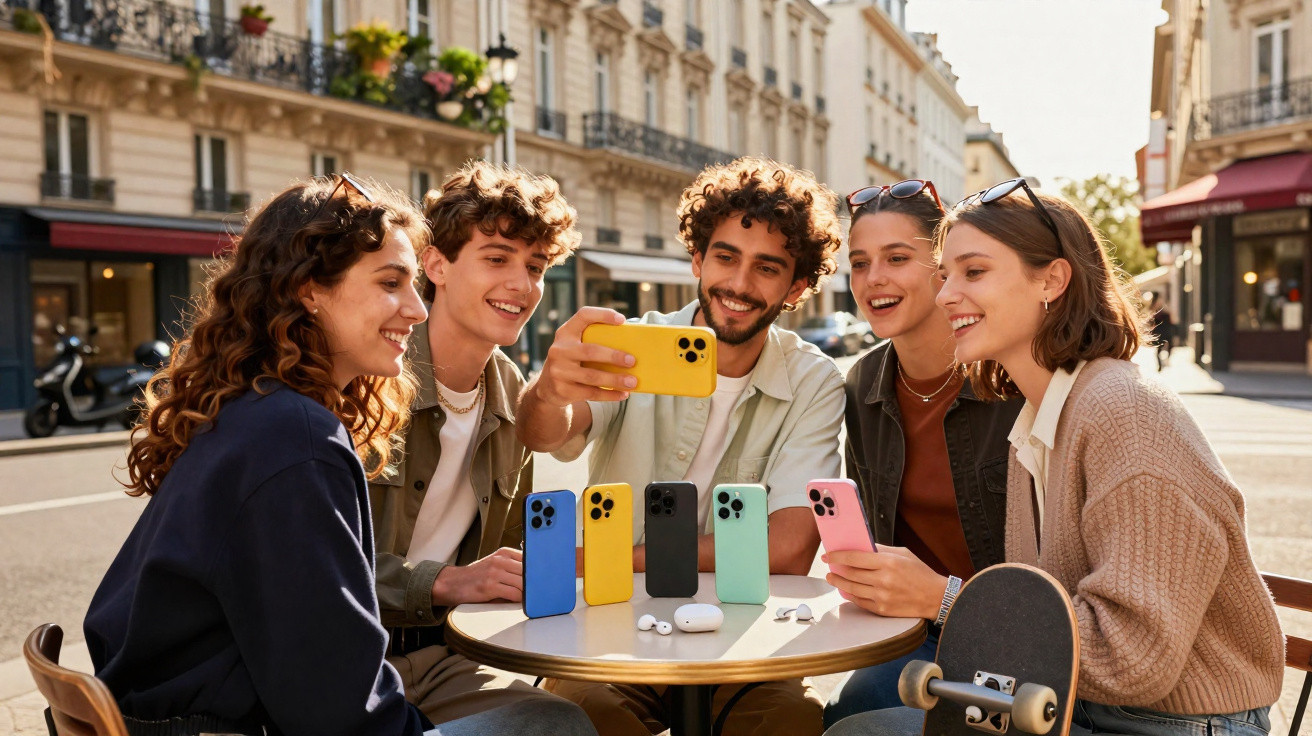
Apple’s strategy in recent years clearly reflects that philosophy. The company adds augmented-reality features to cameras, builds layers of artificial intelligence into photos, messages and health, and brings the iPhone closer to other devices such as the Apple Watch and wireless earphones.
“Rather than replacing the iPhone with another object, Apple is trying to turn the iPhone itself into the hub for every innovation that emerges.”
The mobile phone at the centre of the ecosystem
By this logic, augmented-reality glasses may exist, as may connected watches, sensors in clothing and even devices aimed at mental health. Yet they all connect to the smartphone, which remains the core component: the operation’s “pocket brain”.
Cook is betting on three main moves:
- Build AI into the iPhone system instead of creating a new gadget solely for that purpose.
- Use camera-based augmented reality to retain the phone as the primary window.
- Have the iPhone coordinate other devices, increasing the value of the overall set-up.
The assessment is pragmatic: while billions of people still rely on mobile phones to work, study, pay bills and communicate, full replacement appears risky in both business and adoption terms.
What is at stake in this clash of visions
Behind the public statements lies a battle between business models. If the smartphone stops being the dominant interface, companies that depend on this gateway must reposition themselves. Apple earns money not only from hardware but also from services linked to the iPhone. Meta and other digital giants, meanwhile, are seeking new surfaces for advertising and social interaction.
Brain implants, electronic tattoos and connected glasses raise sensitive questions around privacy, health regulation, surveillance and unequal access. Cultural acceptance of these devices is likely to be slow, particularly in countries with weaker healthcare infrastructure or lower incomes.
“The debate around the ‘end of the smartphone’ runs up less against available technology than against the ethical and social boundaries society is willing to cross.”
Possible scenarios for the coming years
A realistic reading points to a lengthy period in which the smartphone coexists with its supposed replacements. In major urban centres, augmented-reality glasses may spread within particular niches: logistics professionals, doctors, field engineers, gamers and content creators.
Brain implants, meanwhile, are likely to remain concentrated in medicine and controlled research for a long time. Electronic tattoos may first gain momentum in health and sport applications, monitoring performance before attempting to replace conventional communication functions.
For ordinary users, the transition is likely to unfold in layers: first, the watch replaces the mobile phone in certain situations; then, earphones take on voice commands; later, glasses begin showing notifications. The smartphone loses its position as the undisputed lead device, but remains available as a fallback, a reliably dependable backup.
Terms, risks and opportunities worth watching
Some concepts appear frequently in these discussions and merit a straightforward explanation. A “brain-computer interface” is any technology that enables the brain to send commands directly to a machine, without a keyboard or screen. “Augmented reality” means digital elements overlaid on the physical environment. “Wearables” covers all devices worn on the body, including watches, wristbands, glasses and smart clothing.
Each trend brings its own specific risks: even greater dependence on major platforms, extensive collection of intimate data, and effects on mental and physical health. Implants require surgery and raise concerns about privacy intrusion on an entirely different level. Connected glasses could record people without their consent. Electronic tattoos create questions over material safety and reading errors.
On the other hand, there are tangible benefits: greater inclusion for disabled people, more accurate disease monitoring, fewer barriers to accessing information and new ways of working remotely. In many situations, the smartphone serves as a bridge between these worlds, especially in countries where it is already people’s main computer.
For those following technology, the best approach may be to view the “end of the smartphone” less as a date and more as a process. In the short and medium term, Tim Cook’s forecast appears the most plausible: a long period of coexistence in which the iPhone and its rivals remain strong while new devices try to prove that they genuinely deserve to become the main interface for digital life.

Comments
No comments yet. Be the first to comment!
Leave a Comment