
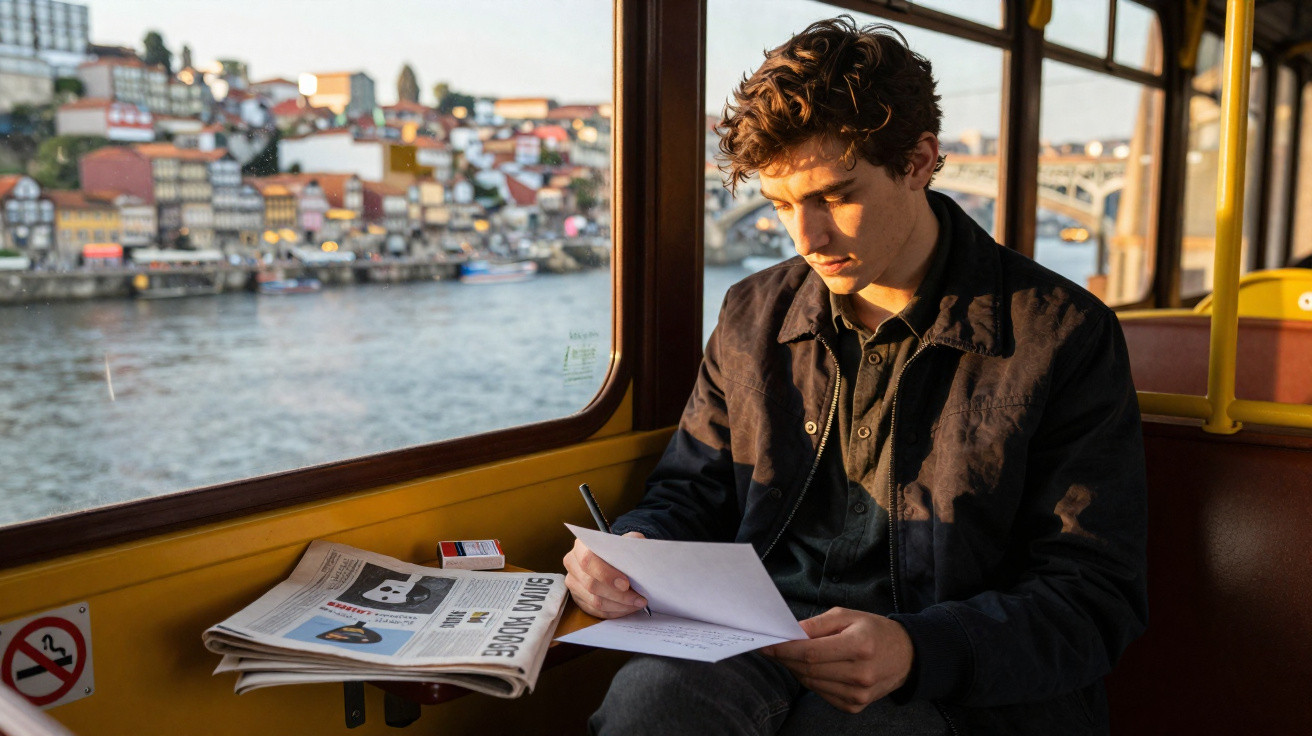
Free public transport in Porto
The Porto City Council deserves praise for approving free public transport. In Porto, most streets - especially in the central area - do not allow cars and people to coexist in a healthy way. According to AI, Porto City Council spends between 4 and 15 million every year on refurbishment works intended to improve traffic. By putting forward this proposal, Pedro Duarte has shown that he understands a collective problem cannot be solved simply by adding together the individual improvements represented by the motor car. It is a different political outlook, and one we should welcome.
For the projected 20 million, we could remove thousands of cars from the streets, prevent many tonnes of CO2 emissions and make better use of the same roads. I have noticed, however, that the Metro is now crowded for much of the day, so strengthening public transport is essential. This requires coordination with neighbouring municipalities, which in turn demands the long-delayed regionalisation. Traffic problems cannot be addressed at municipal level, nor through the remote indifference of central government, where, regrettably, people capable of thinking differently do not flourish.
José Cavalheiro, Matosinhos
Comedy, politics and New York
On 23 April 2026, Jimmy Kimmel, in a meta-comedic sketch, looked at an imaginary Melania and told her that she had the glow of an expectant widow. Whether or not one appreciates the joke, the right to make it predates the republic. The First Lady then publicly stated that Kimmel’s words deepen the sickness of politics in America. As Graça Castanheira wrote in Público, when Melania demands that comedy be kept out of politics, she is not defending “good humour”; she is colluding with the oldest gesture of authoritarianism.
When it suits the left, it is called a joke; when it does not, it becomes hate speech. Speaking of comedy, Mamdani may be in contention for the 2026 best comedian award, surpassing his predecessor and fellow Democrat Eric Adams. In January, the former said New Yorkers would receive free public transport, rent freezes for social housing, free childcare and public grocery shops. This week, he declared New York bankrupt. In 2022, the latter proclaimed that New York was a sanctuary for immigrants and that everyone would be welcomed with open arms - by 2023, he was demanding federal assistance.
The greatest tragedy in our societies comes when “comedians” such as Mandami, Eric Adams or left-wing intellectuals connected with the arts take on any position of leadership. From their moral superiority, they seek to lecture us on civic duty and dignity while viewing a virtual world.
Fernando Ribeiro, São João da Madeira
Tobacco regulation and protecting children
As usual, I read Ricardo Araújo Pereira’s column with great interest and a smile. This time, however, I cannot agree with the dangerous premise on which it rests. He develops a witty and intelligent argument: if the state can ban tobacco sales to children born after a particular year, why should it not ban the sale of sofas? It is absurd, therefore all regulation is absurd.
The difficulty is that sofas are not comparable to tobacco. Otherwise, why would the tobacco industry spend millions designing products that are increasingly attractive and addictive to teenagers? Why would it fund research that denies or downplays the effects of its products? Why invest in experimental marketing, pay influencers and lobby at the highest level? If the issue is allowing adults the freedom to choose to smoke, why does it invest so heavily in ensuring that children and teenagers do not have that freedom?
The answer is plain. The tobacco industry knows that most adults who are not already dependent are no longer easily drawn in by its tactics and products. It also knows that addiction formed at those ages is difficult to overcome. Someone who does not start smoking at 15 will rarely begin at 35. Tobacco is indeed not like a sofa. Nor is it like pollution or poverty, which stem from economic systems or political inaction and kill as many people as, or more people than, tobacco. Tobacco is a multimillion-pound business that deliberately chooses to create dependency before people understand the cost.
Although this column satirises absurdity, it unintentionally gives legitimacy to the idea that shielding children from deliberate capture is paternalism. Prohibition restricted those who already drank; tobacco regulation protects generations who have not yet started. They are different things. The state also routinely intervenes when serious risks arise. This is not about being an overbearing mummy: it is about choosing between a mummy who profits from our choices and one who wants to help us stay healthy.
Margarida Tavares, doctor at ULS São João and researcher at ISPUP. She was Secretary of State for Health Promotion in the 23rd Constitutional Government
Original letters must not exceed 150 words, and the Editorial Team reserves the right to shorten them. Authors must identify themselves by providing their Citizen Card number, address and telephone number. Documents sent to us will not be returned. Letters may also be published in the online edition.
Contact: [email protected]






Comments
No comments yet. Be the first to comment!
Leave a Comment