
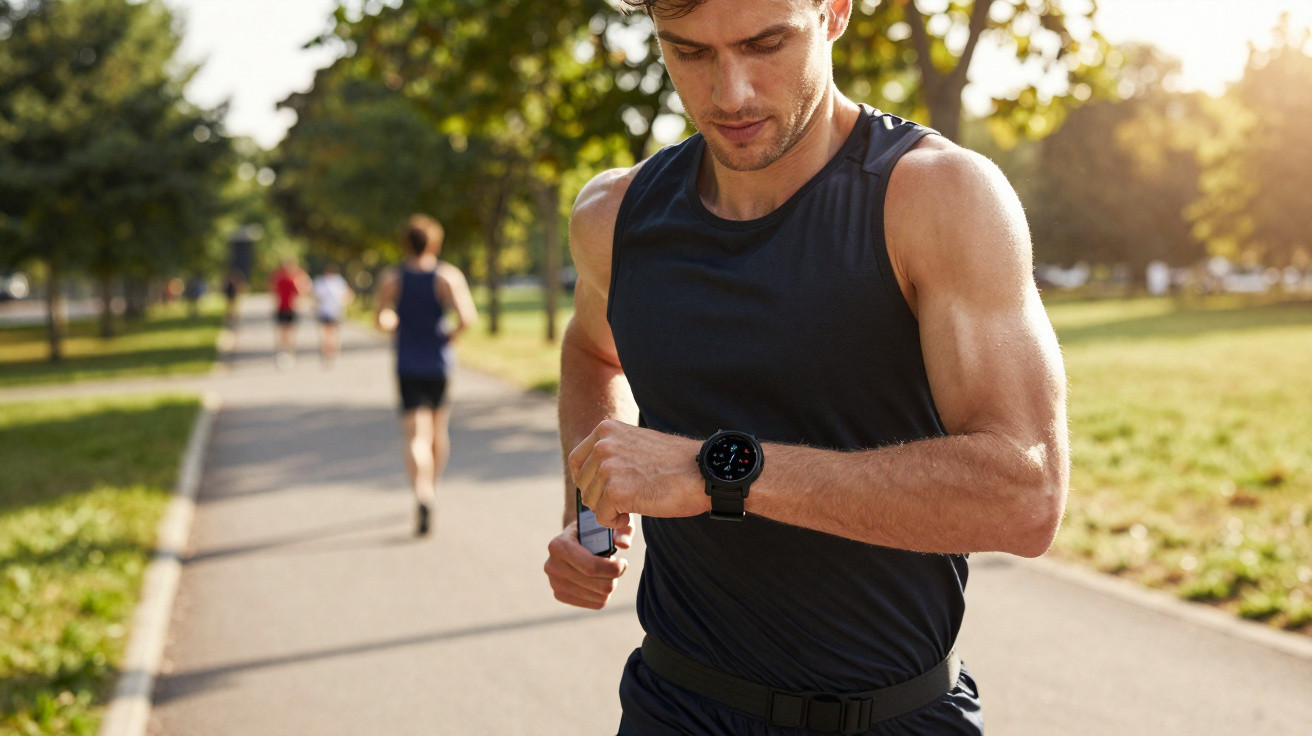
Sports watch offers regularly appear in online retail, and it is easy to scroll past because they all seem much the same. The Garmin Forerunner 55 is different: this GPS watch is clearly aimed at runners, delivers dependable training features and is currently available from a major retailer for less than €160. It sounds like the sort of deal that is hard to pass up. But is it genuinely worthwhile, and who is it for?
Garmin Forerunner 55: what the offer includes
Within the manufacturer's running watch range, the Garmin Forerunner 55 sits among the entry-level models. Although it costs considerably less than full-featured multisport watches, it covers many of the functions recreational athletes genuinely find useful day to day. The current offer puts the white version at €159.99, taking it noticeably below the price point at which many people hesitate before buying new.
The Forerunner 55 has one main aim: to be a straightforward, lightweight running watch with credible training data at an entry-level price.
With built-in GPS, a stated battery life of up to around two weeks in smartwatch mode and dedicated running tools, the model is aimed squarely at people who find a smartphone on their wrist overwhelming but still want to see the numbers.
Health tracking: more than pace and heart rate
The watch does not simply record standard exercise metrics such as pace, distance and heart rate. Instead, it is designed to provide a daily picture of overall wellbeing. Among the measurements recorded by the Forerunner 55 are:
- breathing rate
- wrist-based heart rate
- sleep quality, including analysis of different sleep stages
- activity across the day, including steps and active minutes
- an estimate of biological, or “body”, age
All information can be viewed on the watch display, while anyone wanting more detailed analysis can use the companion smartphone app. This makes patterns easier to spot: when is sleep truly restorative? Which training days are more demanding than expected? Where is recovery lacking?
Beginners in particular can easily underestimate how much work stress or poor sleep reduces performance. A watch such as the Forerunner 55 brings those less obvious influences into focus and can help create a better balance between training load and recovery.
Garmin Forerunner 55 running features: support for training
Running is unmistakably the main focus. To provide guidance, the watch draws on running sessions and performance data from recent days and weeks. That history is then used to suggest the next workout. If someone completed a hard run the previous day, for instance, they are more likely to be advised to take on an easier session rather than simply going flat out again.
Personalised training suggestions rather than fixed plans
Each day, the Forerunner 55 presents a recommendation for the next run that reflects current fitness and training history. This is principally useful for runners who do not want to follow a fixed plan from a coach or app, but also do not want to accumulate kilometres without direction.
It also offers further tools that can quickly prove useful in everyday training:
- Cadence alert: The watch notifies the runner when they are moving too slowly or too rapidly and leave a pre-set cadence zone.
- Finish-time prediction: During a run, it estimates the likely finishing time from the distance and pace.
- Interval options: Those who want to run structured intervals can create and complete them directly on the watch.
For many recreational runners, this effectively creates a “digital running partner” on the wrist, helping them check whether their current pace suits the intended training goal.
Battery life: two weeks without pressure to recharge
A flat battery can soon become an everyday annoyance. In normal smartwatch use, the Forerunner 55 is said to last for up to two weeks. Its runtime is considerably shorter in GPS-only operation, but it remains more than adequate for typical training volumes. Daily runs of 30–60 minutes are easily achievable without constantly checking the charge level.
For active users who train almost every day, every charging break avoided matters – and this is exactly where the Forerunner 55 performs well.
Who will genuinely benefit from the Forerunner 55?
The watch offers the greatest value to people who currently run using a smartphone or a basic fitness band. Anyone looking to structure their running sessions more effectively gains a clear step forward through the straightforward wrist-based display.
| Runner type | Benefit of the Forerunner 55 |
|---|---|
| Beginner | Simple operation, daily workout suggestions, overview of training load |
| Ambitious recreational runner | Cadence alert, pace information, better pace control on steady runs |
| Occasional runner | Motivation from data, movement reminders, health overview |
Anyone already wearing a current higher-end multisport watch is unlikely to be tempted by this deal. It lacks features such as detailed navigation maps, exceptionally long GPS battery life and specialist profiles for triathlon and mountain sports. The model is deliberately kept streamlined.
What makes this offer technically appealing
At its current price, the Forerunner 55 provides a package that compares well within its market segment. Typical specifications in this category include, for example:
- a lightweight case that is comfortable for running
- GPS, GLONASS and usually additional satellite systems for positioning
- an optical wrist-based heart-rate sensor
- water resistance, so rain and sweat are not an issue
- smartwatch features such as notifications from a smartphone
Its key strength is the combination of a running focus, health data and a relatively low entry price. Compared with conventional smartwatches, which mainly prioritise apps and phone functions, this watch takes a more sport-focused approach.
What to consider before buying
Before pressing the order button on impulse, it is worth carrying out a quick reality check. A few questions can make the decision easier:
- Do I run regularly enough for a running watch to make sense?
- Is a simple display sufficient, or do I expect colourful maps and complex analysis directly on the watch?
- Do I also want to track other sports, such as swimming, cycling or gym workouts, in detail?
- How important are smartwatch features such as music control or paying from the wrist?
The Forerunner 55 is a fairly good fit for anyone who mainly runs, can do without unnecessary extras and wants the lightest possible device. Those who want to use music streaming, contactless payments and map navigation every day should instead consider more expensive models.
Further insight: what do all these figures actually mean?
The watch presents a range of terms and numbers that say little without context. For many users, the estimate of “body age” compared with their actual age is particularly interesting. It is based on an algorithm that takes into account factors including fitness level, activity and heart-rate variability. If this figure is significantly lower than a person's real age, it indicates a good level of fitness.
The same applies to sleep tracking and breathing rate. Checking this data regularly can reveal whether stressful periods are getting out of hand or whether late training sessions are affecting sleep. Sports watches are not a substitute for a medical diagnosis, but they can build awareness of one's own body that can otherwise easily be lost in a stressful daily routine.
Anyone taking advantage of the current deal therefore gets more than a GPS stopwatch: it is a tool that makes training routines and recovery easier to understand. This increases the likelihood of avoiding injuries, recognising excessive strain early and approaching running goals in a more controlled way – and that blend is exactly what makes the Forerunner 55 an appealing offer in the under-€160 price range.


Comments
No comments yet. Be the first to comment!
Leave a Comment