
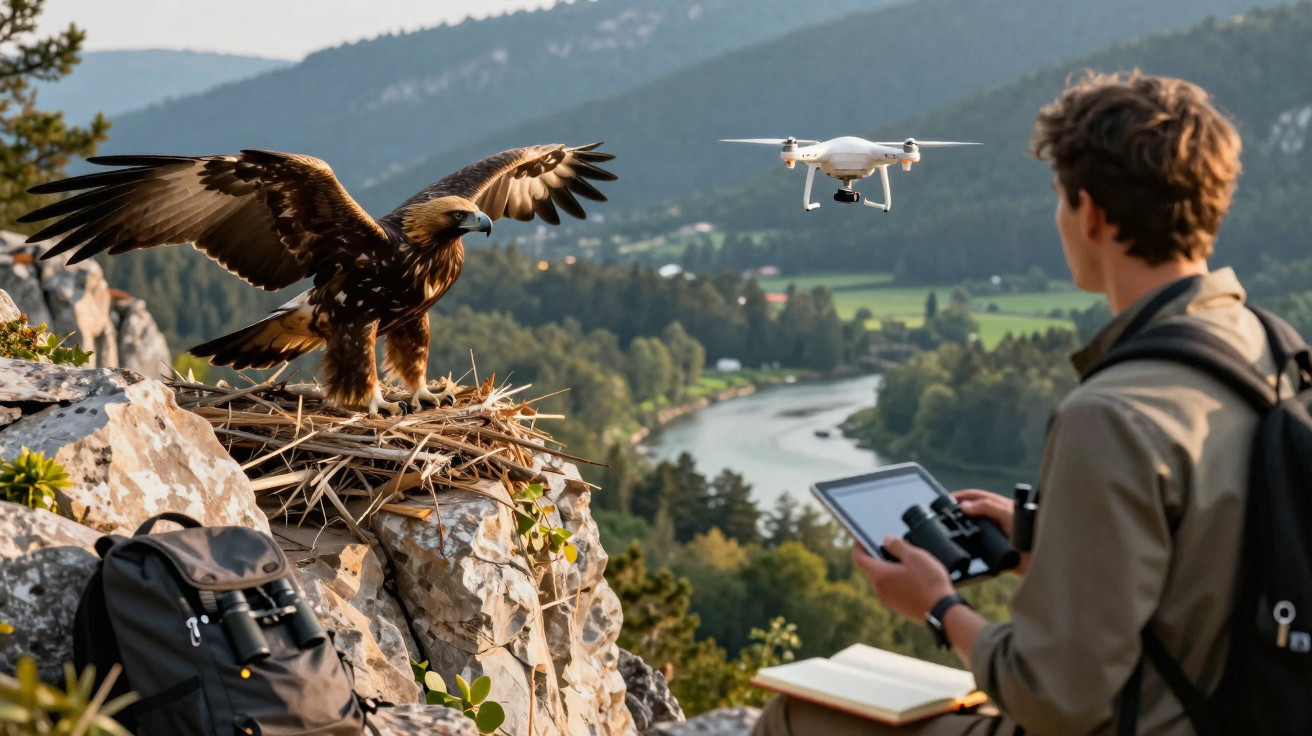
The constant presence of unmanned aircraft in natural settings makes fieldwork a subtle challenge. Using modern equipment to monitor nests in remote locations demands attention to the signals given by every wild species.
What impact do drones have on birds of prey?
Flying technological equipment over hard-to-reach sites can reveal distinctive behaviour among native wildlife. During operations in Latin America, the vast majority of Neotropical birds of prey showed some form of response when they noticed the device in the sky.
Detailed assessment of hundreds of flights over active nests has helped explain how these species respond when motors approach. In many cases, simply seeing the machine within their territory creates unease and alters the routine of the observed individual.
Can the harpy eagle really carry very heavy prey?
Regarded as the largest bird of prey in Brazilian territory, the harpy eagle has claws strong enough to lift… Read more
How do birds react to an aerial approach?
Defensive displays are the most common behaviours when a drone moves close to breeding sites. Birds generally adopt watchful postures and produce alarm calls to defend their young from the threat hanging in the aerial space.
In more extreme circumstances, sudden manoeuvres may trigger direct attacks on the equipment or cause a temporary departure from the nest. Such incidents are more intense when the minimum safe distance is disregarded by the pilot during outdoor work.
Below is a video from the Sociedad Ornitológica de Córdoba SOC YouTube channel that explores the points discussed in this subject in greater depth:
Which factors increase disturbance among animals at nests?
The altitude and flight path selected for operating the aircraft directly affect the level of disturbance experienced by the animals. Flights made vertically above the tree canopy are likely to prompt far stronger reactions than horizontal movements that create gradual distance.
The stage of the breeding cycle also determines how adults react to technology near active nests. Incubation and the first weeks of chicks' lives are periods of extreme vulnerability for the monitored population.
Stress factors
Alert triggers
The main conditions that cause adverse reactions during flights are:
- Approaches that are too close to nests;
- Vertical aerial passes directly above the birds;
- Prolonged operations during the incubation and chick-rearing period.
Which best practices reduce disturbance during monitoring?
Using well-structured technical protocols ensures that data can be collected without endangering the animals' welfare. Keeping a sensible distance and planning lateral approach routes substantially reduce the sound and visual impact on the natural habitat.
Restricting the duration of each aerial operation also reduces the physical and emotional strain on individuals defending their nests. Optical lenses with powerful range remove the need for intrusive approaches to record information in a completely safe way.
Several key recommendations help to lessen the negative effects of operations:
- Keep a safe distance from monitored nests;
- Reduce the amount of time the aircraft remains at the site;
- Avoid direct vertical flights over the specimens.
Why does ecological balance depend on responsible flights?
Protecting biodiversity requires an ongoing commitment to balancing methodological advances with the calm of wild ecosystems. When researchers understand birds' sensitivity, science progresses in complete harmony with the biological needs of every specimen in the forest environment.
Bringing biological knowledge together with technical aircraft control makes monitoring a valuable conservation tool. Respecting natural limits helps ensure the survival of future generations and preserves the heritage of life on the planet.




Comments
No comments yet. Be the first to comment!
Leave a Comment