
Add us to your favourites on Google
Why add us? Get the latest from Zona Militar in your Google feed.
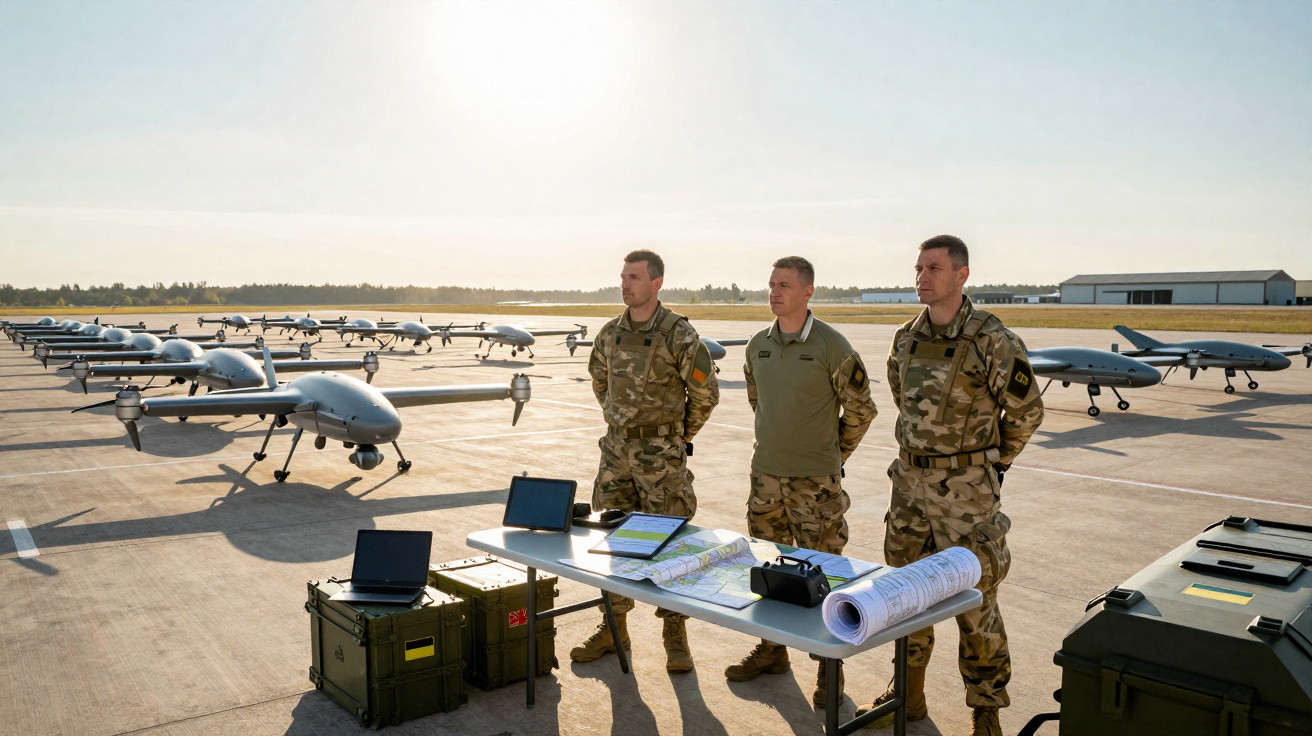
Following one of the most significant attacks on Moscow since the war began, the United Kingdom has announced that it will supply the Ukrainian Armed Forces with 150,000 additional drones, to be delivered before the end of the current year. This development is part of a package worth more than £750 million set out by London, which also includes a batch of 350 air-defence missiles and radars, funded through a loan from the Extraordinary Revenue Acceleration (ERA) initiative.
The new British Defence Secretary, Dan Jarvis, recently addressed the matter, stating: “For 75 years, NATO has been the cornerstone of the United Kingdom’s security. My priorities are to strengthen the alliance’s deterrence and defence, and to continue supporting Ukraine as it defends itself against Russia’s brutal war of aggression. This package of drones, air-defence missiles and radars will help shield innocent Ukrainian people from Putin’s drone and missile bombardment, and it is an honour to welcome President Zelensky to this important meeting (Editor’s note: of the Ukraine Defence Contact Group).”
Jarvis also had the opportunity to meet the Ukrainian President, using the encounter to hear the country’s requirements first-hand and to reiterate British support once again. In particular, the official United Kingdom government statement says diplomatic pressure on Russia, economic sanctions and operations intended to disrupt the activities of the so-called “shadow fleet” used by Moscow to circumvent them will be intensified.
During the meeting, it was also confirmed that the United Kingdom will take command of the Multinational Force for Ukraine Headquarters (MNF-U), made possible by the appointment of Major General Tom Bateman, who will take up the position next month. The multinational team, made up of several of Kyiv’s partners, is primarily intended to work on the eventual regeneration of the Ukrainian Armed Forces once a peace agreement is reached.
The recent Ukrainian attack on Moscow
Returning to the Ukrainian attack on Moscow mentioned at the outset, currently available reports indicate that hundreds of drones and long-range missiles were used against various targets, chiefly those linked to Russian oil infrastructure. In an ironic remark, President Zelensky described them as “long-range sanctions” carried out by his Armed Forces. The action would have been a response to a major Russian attack on Kyiv last week, which notably damaged a site of great importance to the country’s Orthodox Christianity.
According to the Russian Ministry of Defence and Governor Andrei Vorobiov, the operations left around 17 people injured, while the city’s air defences intercepted several dozen drones. Nevertheless, nearly 200 unmanned systems reportedly reached their targets around the Russian capital. Local residents captured the events in numerous photographs and videos showing the large columns of smoke produced by the strikes.
Among the principal targets was the Kapotnya refinery, situated south-east of Moscow. It had already been targeted in earlier operations during the month, in line with Ukraine’s new strategy of striking Russia’s war economy and moving the conflict into a new phase beyond the defence of its own cities, as had been the case until now. Some of the published footage even shows an oil storage tank exploding, with its lid hurled several metres from its original position. Fires were also recorded at a nearby shopping centre, while all activity at the city’s airports was suspended.
Previous United Kingdom drone deliveries to Ukraine
Against this backdrop, it is important to note that the United Kingdom has become one of Ukraine’s most significant drone suppliers, with several precedents illustrating that role. Below is a brief review of some developments from the past two and a half years of the conflict.
In February 2024, we reported that the United Kingdom had reached an agreement with Latvia to establish an international coalition aimed at developing and expanding Ukraine’s unmanned capabilities, with the long-term goal of the country acquiring up to one million new systems. At the time, the development was welcomed by former British Defence Secretary Grant Shapps and his Latvian counterpart, Andris Sprūds. The latter recently resigned following an incident involving a Russian drone entering his country’s airspace and the ensuing political uproar over what was considered an ineffective government response; the controversy ultimately brought down the governing coalition.
By January 2025, we also reported that this coalition was prepared to send more than 30,000 drones to Ukraine after contracts worth up to £45 million were signed, financed by the United Kingdom, Denmark, the Netherlands, Latvia and Sweden. With former Defence Secretary John Healey leading the department, the British government said the package contained a substantial number of FPV models, which had inflicted significant damage on Russian armoured vehicles deployed in Ukrainian territory. This applied both to older platforms such as the T-72 and to more modern T-90 models.
More recently, the United Kingdom also announced the opening of a new drone production factory for the Ukrainian Armed Forces in the East Anglia region. The facilities belong to Ukrspecsystems, with more than £200 million invested in them. According to the British Ministry of Defence, Ukrainian troops had inflicted up to $3 billion in damage on their Russian counterparts using only the drones produced by the company up to that point.
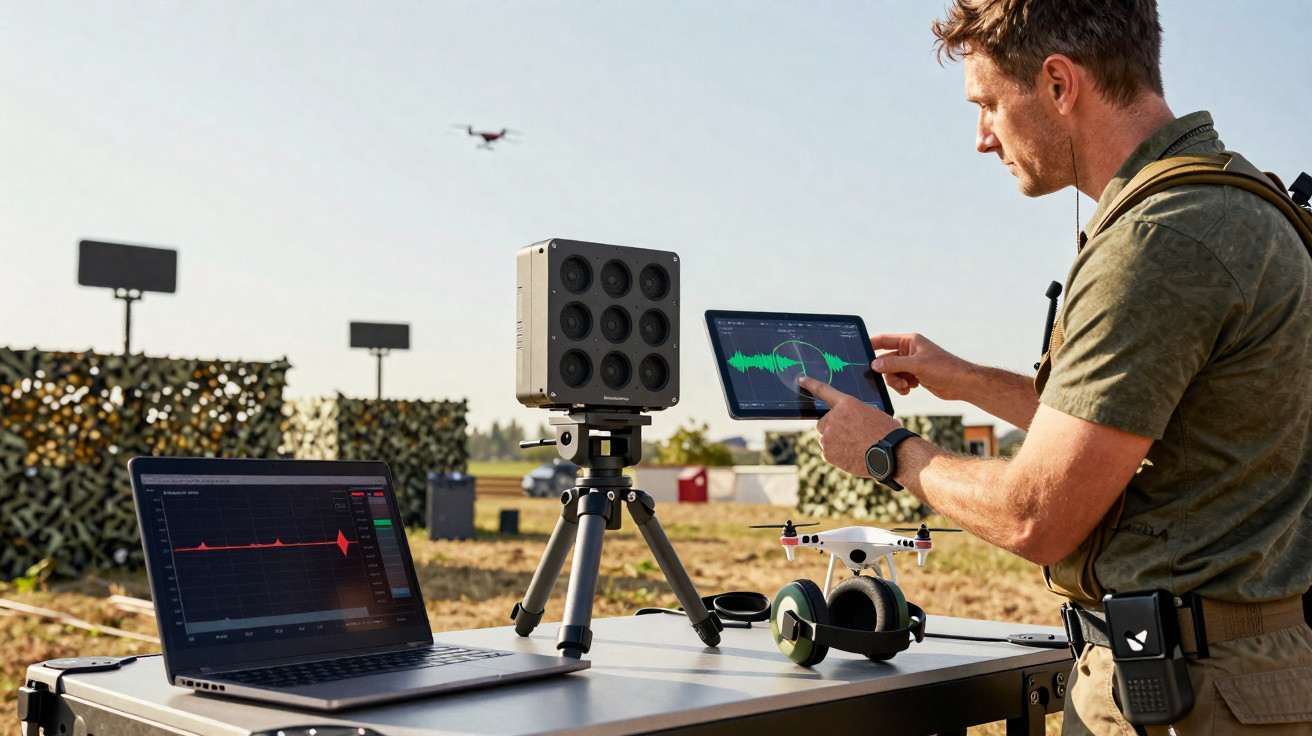
Images used for illustrative purposes





Comments
No comments yet. Be the first to comment!
Leave a Comment